AQF Level 5 qualified arborist reports for development applications, hazardous tree assessments and pre-purchase inspections — to AS 4970-2009 standard, accepted by Northern Beaches Council.
An arborist report is a formal written document prepared by a qualified arborist that assesses one or more trees and provides a professional opinion on their condition, risk, value or impact on development. Unlike a verbal assessment or a quote, an arborist report is signed, dated, and referenced against Australian Standards and relevant planning instruments — making it a document that councils, solicitors, insurers and courts accept as professional evidence.
On the Northern Beaches, arborist reports are most commonly required as part of a Development Application (DA) where a proposed building or civil works will occur near significant trees. Northern Beaches Council's DCP Part B13 requires that any DA involving construction within the structural root zone of a significant tree be accompanied by an arborist report prepared to Australian Standard AS 4970-2009 (Protection of Trees on Development Sites). This is not negotiable — a DA lodged without the required arborist documentation will be returned as incomplete.
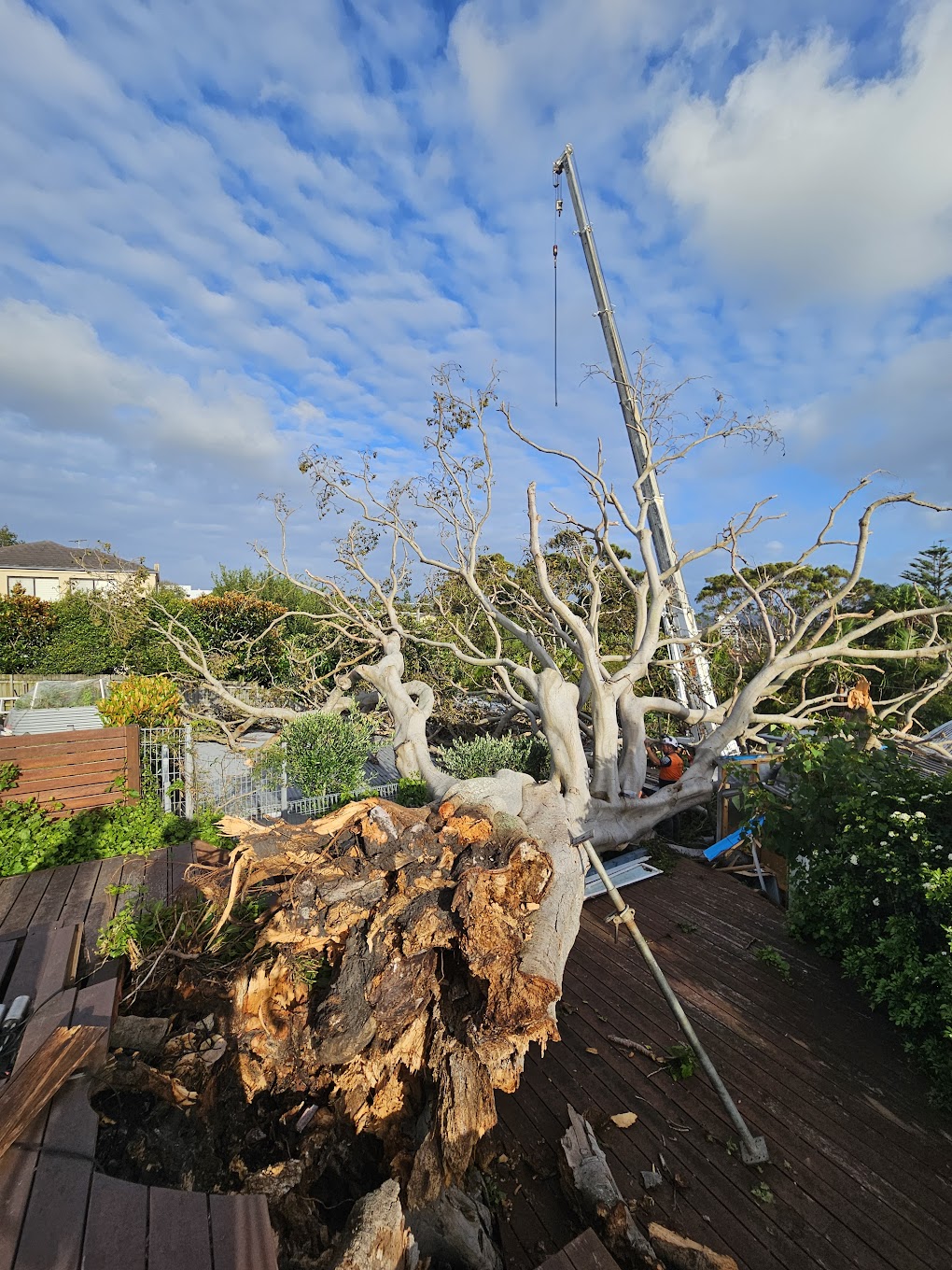
Reports are also frequently required for hazardous tree assessments, pre-purchase property inspections, insurance claims after storm or root damage, and applications to remove protected trees where the owner is arguing a safety case.
For DA-related work, Northern Beaches Council requires reports to be prepared by an arborist holding a minimum AQF Level 5 qualification (Diploma of Horticulture or equivalent arboricultural qualification). Alex holds AQF Level 5 and has prepared arborist reports accepted by Northern Beaches Council for residential developments, pool installations, extensions, and heritage property works.
Each report type serves a different purpose. Here is what we prepare and when each is needed.
A development application arborist report prepared to AS 4970-2009 is a structured document that councils use to evaluate whether proposed works can proceed without harming significant trees, and what protection measures are required if they can. The standard sets out exactly what must be included.
The report begins with tree identification and condition assessment — species, dimensions (height, trunk diameter, canopy spread), structural condition, health rating, and estimated remaining useful life. Each tree is assigned a retention value: low, medium or high based on size, species, structural integrity, and whether it is a protected species or listed on council's significant tree register.
The report then maps the structural root zone (SRZ) and tree protection zone (TPZ) for each retained tree, calculated to the formula in AS 4970-2009. These zones define where construction activity, soil compaction, fill, excavation or chemical use must be avoided or managed. The report specifies what tree protection measures are required — fencing, ground protection, exclusion zones — and gives construction methodology recommendations for works within the TPZ, such as hand excavation requirements, root pruning methodology, and canopy clearance pruning.
For trees the applicant proposes to remove, the report provides a justification assessment and, where removal is approved, may recommend replacement planting specifications to satisfy council's canopy cover requirements.
NBC requires an AS 4970-2009 arborist report as part of a DA when:
A "significant tree" under NBC's DCP is any tree 5 m or taller, with a canopy spread of 5 m or more, or a trunk diameter exceeding 30 cm at 1 m above ground.
If you are unsure whether your project requires a report, call Alex on 0452 030 077 for a quick consultation at no charge.
Alex visits your property, identifies and measures all relevant trees, assesses their structural condition and health, photographs each tree, and takes soil and site notes relevant to the proposed works. Most site inspections take 30–90 minutes depending on the number of trees.
Structural root zones and tree protection zones are calculated to AS 4970-2009. The development plans are overlaid with tree zones to identify any conflicts. Tree retention values are assigned and construction impact is assessed for each retained tree.
The written report is prepared, including all required sections, tree schedule, site plan with mapped zones, photographs, and recommendations. Most reports are delivered within 3–5 business days. The report is signed by Alex as an AQF Level 5 arborist and is submitted directly to council with your DA.
All report fees are fixed and quoted before we start — no surprises. The fee covers site inspection, assessment, report preparation and one round of council-requested amendments if required.
Fees are indicative. A fixed quote is provided after a brief discussion of your specific requirements. Council amendment responses (one round) are included at no extra charge.
When do I need an arborist report for a DA on the Northern Beaches?
Northern Beaches Council requires an AS 4970-2009 arborist report whenever a DA involves construction, excavation or other works within the structural root zone of a significant tree — that means any tree 5 m or taller, with a canopy of 5 m or more, or a trunk diameter over 30 cm at 1 m. This includes pools, extensions, new builds, driveways and subdivisions. If you're unsure, call us before lodging — a missing report will have your DA returned as incomplete.
How much does an arborist report cost?
A standard DA arborist report covering 1–3 trees typically costs $350–$550. Complex sites with heritage overlays, biodiversity controls or four or more trees cost $600–$1,200. All fees are fixed and quoted upfront before work starts. See the pricing table above for a full breakdown.
What is AS 4970-2009?
AS 4970-2009 is the Australian Standard for the Protection of Trees on Development Sites. It sets out the methodology for calculating structural root zones, assessing tree condition, specifying protection measures, and formatting arborist reports submitted with development applications. Northern Beaches Council requires DA arborist reports to comply with this standard.
Can an arborist report help me get permission to remove a tree?
Yes. A hazard assessment report that clearly documents structural defects, disease, root damage or an imminent safety risk will support a tree removal application to Northern Beaches Council. The report must be prepared by an AQF Level 5 arborist and must demonstrate the risk. We prepare these regularly and can advise on how strong a case you have before you spend money on the report.
How long does an arborist report take?
Most reports are completed within 3–5 business days of the site inspection. Complex multi-tree reports or heritage sites may take 7–10 business days. If you have a DA lodgement deadline, tell us when you call and we'll work to your timeline.
Do you cover all suburbs on the Northern Beaches?
Yes — we prepare arborist reports for properties across the Northern Beaches LGA, including Manly, Dee Why, Narrabeen, Avalon, Newport, Mona Vale, Seaforth, Freshwater, Curl Curl, Belrose, Frenchs Forest and all surrounding suburbs. We are based in North Narrabeen.
Call Alex directly to discuss your project. Most enquiries can be assessed in a quick phone call before we commit to a site visit.
0452 030 077