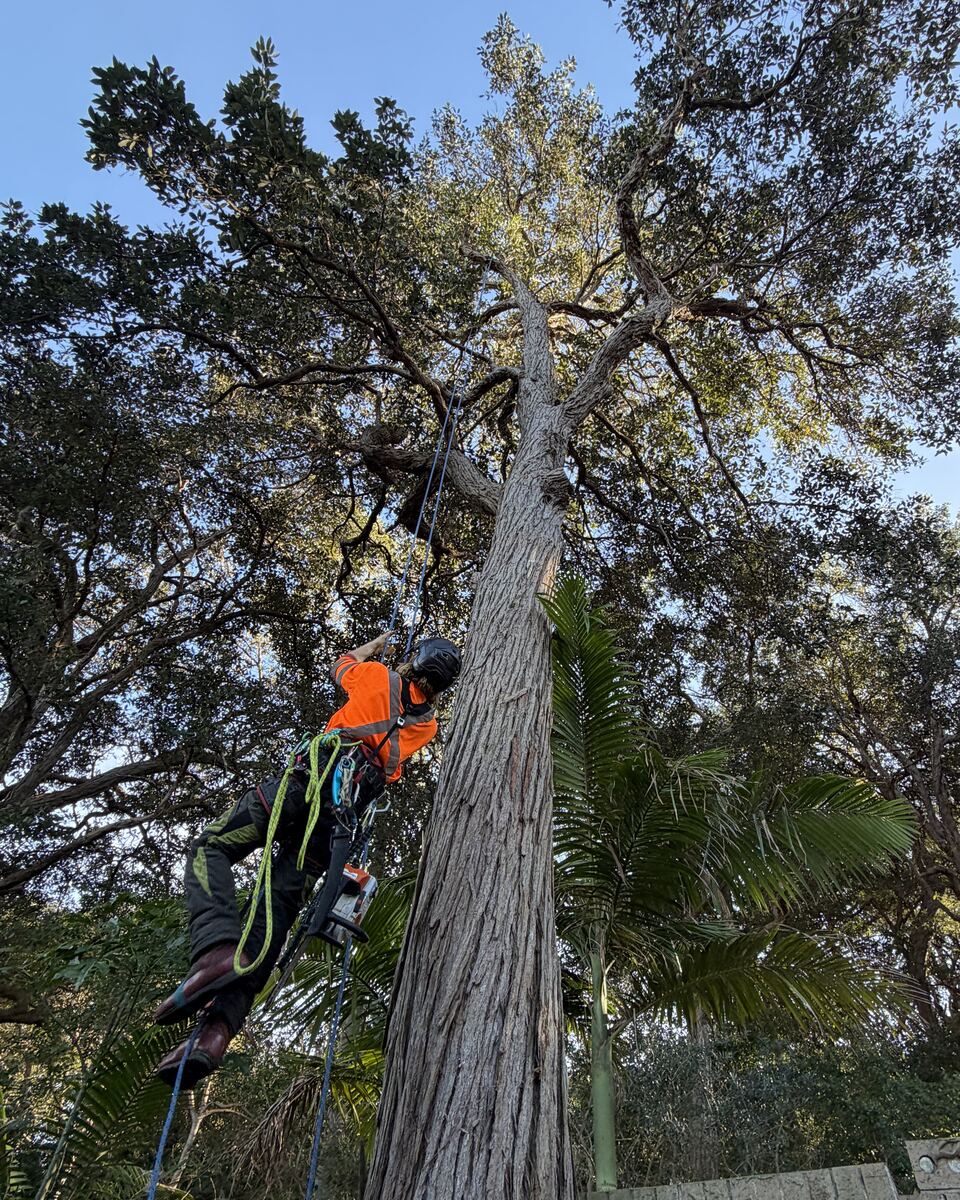
If you've been looking at an overgrown tree wondering whether to do something about it, winter is usually the answer. Across Sydney's Northern Beaches, the cooler months from June through August are the best window of the year to prune most trees — and as a qualified arborist working across Narrabeen, Avalon, Newport and Palm Beach, it's when a good portion of our pruning work gets booked in.
This guide explains why winter pruning works, which trees benefit most, which ones you should leave alone until spring, and how to get the job done properly without harming the tree. It's written for homeowners who want to understand what they're paying for — not just take our word for it.
Why winter is the best time to prune
For most trees, dormancy is the key. As temperatures drop and growth slows over winter, deciduous trees lose their leaves and even our hardy natives pause their active growth. Pruning during this quieter period has several real advantages.
The first is that the tree's structure is visible. With the leaf canopy thinned or gone, an arborist can actually see the branch architecture — crossing limbs, deadwood, weak unions and the natural shape of the crown. That makes for far more precise, considered cuts than guessing through a wall of summer foliage.
The second is that pruning wounds matter less in winter. When a tree is dormant it isn't pushing sap and energy into rapid growth, so the cuts you make are smaller stresses on the system. Come spring, the tree directs its stored energy into sealing those wounds and producing strong new growth exactly where you want it. Prune heavily in the middle of a hot summer and you ask the tree to recover during its most demanding season — winter avoids that.
The third advantage is disease and pest pressure. Many fungal pathogens and insect pests that exploit fresh pruning cuts are far less active in the cold. Pruning while they're dormant reduces the chance of a wound becoming an entry point for infection. This is one of the reasons winter pruning is strongly favoured for fruit trees in particular.
Finally, there's a practical local reason. The Northern Beaches gets its heaviest weather — the east coast lows, the southerly busters, the storms that bring trees and limbs down — through autumn and winter. Getting structural pruning and deadwood removal done now means fewer weak, overextended limbs hanging over your roof when the next big blow arrives.
Which trees to prune in winter
Not every tree wants the same treatment, but here's how the common Northern Beaches species generally respond to winter pruning.
Deciduous exotics — think ornamental pears, maples, crepe myrtles, liquidambars, frangipani and deciduous fruit trees — are the classic winter pruning candidates. They're fully dormant, bare, and respond beautifully to structural and formative pruning during this window. If you only prune one category of tree in winter, make it these.
Fruit trees such as apples, pears, plums and citrus benefit hugely from a winter prune to manage shape, airflow and next season's crop. Winter is the standard time to prune most deciduous fruit trees; citrus is a little more sensitive to cold, so we time those carefully toward the tail end of winter.
Eucalypts and other natives — the gums, angophoras, banksias and paperbarks that define the Northern Beaches canopy — don't truly go dormant the way exotics do, but they still benefit from winter work. Cooler conditions mean less stress, and crown thinning, deadwooding and clearance pruning are all well-suited to this time of year. Because eucalypts can be unpredictable and prone to limb failure, this is work for a qualified arborist, not a ladder-and-handsaw weekend job.
Hedges can be tidied in winter, though their main shaping is often better timed for the growing season. Winter is a good moment to bring an overgrown hedge back under control before spring growth kicks in. For timing, species-specific advice and 2026 pricing, see our hedge trimming guide for the Northern Beaches.
Which trees to leave until later
Winter isn't right for everything, and a good arborist will tell you when to wait.
Spring-flowering trees and shrubs that set their buds the previous year — many ornamentals, wisteria, certain magnolias and the like — should generally be pruned after they flower, not before. Prune them in winter and you cut off the very buds that would have given you a spring display.
Palms are a special case. Palms aren't pruned like broadleaf trees — over-trimming or "hurricane cutting" a palm by stripping its green fronds actually weakens and can kill it. Palms should only have dead or dying fronds, seed pods and flower stalks removed, and that can be done year-round. See our palm tree pruning page for how this is done properly.
Frost-tender and newly planted trees can also be better left until the worst of the cold has passed, so fresh cuts aren't exposed to frost damage on a tree that's still establishing.
If you're unsure which camp your tree falls into, that's exactly the kind of thing we'll tell you straight when we come out to quote — including when the honest answer is "leave it for now."
Pruning is not lopping
This matters enough to say plainly: winter is the time for proper pruning, not lopping. "Lopping" — indiscriminately cutting branches back to stubs to reduce a tree's size — is not something a qualified arborist does. It creates weak, poorly attached regrowth, opens the tree to decay, and often leaves you with a worse problem in a few years' time.
Real pruning is selective and purposeful: removing deadwood, thinning the crown to let light and wind through, reducing specific over-extended limbs back to appropriate growth points, and shaping young trees so they develop strong structure. Every cut should have a reason. We carry out all pruning to the Australian Standard AS 4373-2007 (Pruning of Amenity Trees) on every job — not as a marketing line, but because it's the difference between a tree that thrives and one that suffers. There's more on this in our tree lopping guide.
What winter pruning achieves
Done well, a winter prune delivers a few clear outcomes:
- Better tree health — removing dead, diseased and crossing branches lets the tree put its energy into strong, healthy growth.
- Improved safety — taking weight off over-extended limbs and clearing deadwood reduces the risk of limb failure over your home, car or the kids' trampoline, especially through storm season.
- More light and better views — selective crown thinning can bring light back into a shaded garden or open up that Pittwater or ocean glimpse without butchering the tree.
- Stronger structure — formative pruning of younger trees now saves expensive, dramatic work later.
- Tidier property — clearance from roofs, gutters, powerlines and boundaries keeps things neat and reduces leaf-litter headaches.
Do you need a council permit?
Often, yes — and this trips a lot of people up. Northern Beaches Council regulates the pruning and removal of many trees under its Development Control Plan, and pruning more than a certain proportion of a tree's canopy, or working on a protected or significant tree, can require approval. Minor maintenance pruning of small amounts of deadwood is usually exempt, but it's genuinely worth checking before any substantial work.
We deal with these rules every week and can advise you on what's exempt and what needs an application as part of your quote. For the full picture, see our Northern Beaches tree permit guide.
Why use a qualified arborist for winter pruning
Pruning looks simple from the ground. It isn't. Where a cut is made — relative to the branch collar, the growth points, the tree's overall load — determines whether the tree heals cleanly or slowly declines. Get it wrong and you can introduce decay, create hazardous regrowth, or unbalance a tree so it becomes more likely to fail.
Every job at The Living Canopy is attended by an AQF qualified arborist. We're fully insured with $20 million public liability and workers compensation, and we work to AS 4373-2007 as standard. You deal directly with me, Alex — a qualified arborist with over a decade of experience across the UK and Australia — not a different crew each time. And where pruning is the right answer rather than removal, that's what we'll recommend, even when it means less work for us.
If a tree is genuinely beyond saving or in the wrong place, we'll tell you that honestly too, and our tree removal service is there for it. You can also get a sense of pricing in our tree removal cost guide. For pruning-specific pricing, including a breakdown by tree size and access, see our tree pruning cost guide for the Northern Beaches.
Ready to book your winter prune?
Winter is a short window and it books up fast. We'll come to your property, assess the tree, and give you a clear no-obligation quote.
Request a free quoteWinter pruning FAQs
Is winter really the best time to prune trees in Sydney?
For most deciduous trees and fruit trees, yes — winter dormancy is the ideal window. Many natives also prune well in the cooler months. The main exceptions are spring-flowering trees (prune after they flower) and palms (which are maintained, not pruned, year-round).
Will pruning in winter hurt my tree?
Done correctly, no — winter pruning is gentler on a tree than summer pruning because the tree is dormant and recovers strongly in spring. Done badly (lopping, topping, over-removal), pruning can harm a tree in any season. The technique matters more than the timing.
How much of a tree can be pruned at once?
As a rule, removing more than around a quarter of a tree's live canopy in one go stresses the tree and may also trigger council permit requirements. A qualified arborist will prune conservatively and within the standard.
Do I need council approval to prune my tree?
Possibly. Northern Beaches Council controls work on many trees, and substantial pruning can need approval. Light deadwooding is often exempt. We'll advise you as part of the quote — or see our permit guide.
What about storm-damaged trees — can they wait for winter?
No. A hazardous or storm-damaged tree is a safety issue, not a seasonal maintenance job. Call us straight away for emergency tree work.