Serving Clareville and the surrounding Northern Beaches — qualified, insured arborist work on exclusive Pittwater waterfront and hillside properties.
Clareville is one of the Northern Beaches' most exclusive residential areas, situated on the western shore of Pittwater between Bilgola and Avalon. Properties here range from waterfront blocks with established gardens running down to private jetties, to hillside homes on sandstone ridges with sweeping water views. The gardens at Clareville are often older, with trees that have been growing since the mid-20th century or earlier — some are remarkable specimens by any measure. When you call The Living Canopy, you speak directly to Alex Price, the qualified arborist who will come out and give you an honest assessment of what the trees need.
Pittwater waterfront properties present a specific set of tree management challenges. Trees growing close to the water — whether on the foreshore itself or within the garden zones of waterfront blocks — are subject to the effects of salt water, waterlogged soils at high tide and periodic inundation during storms. Casuarina glauca (Swamp Oak) and Melaleuca quinquenervia (Broad-leaved Paperbark) are well adapted to these conditions, but even these species can develop structural issues when they outgrow their position. The foreshore environment is also ecologically sensitive — works near the water's edge are subject to additional considerations under the relevant planning framework.
On the hillside properties, the situation is different. Sandstone ridges above the waterfront support dry sclerophyll species — Angophora costata and Banksia serrata are common — while the more sheltered gullies between ridges often have denser vegetation, including Pittosporum undulatum and various Acacia species. Large specimen trees on these properties — particularly old Angophoras with wide-spreading crowns — often require crown management to maintain clearance from structures and to reduce the risk of large-limb failure over high-traffic areas.
Old garden trees — Jacarandas, large-leafed Figs, Camphor Laurels and other species planted for aesthetics over decades — are common in Clareville's more established gardens. Some of these are genuinely beautiful and structurally sound; others are approaching the end of their practical life. We assess older ornamentals honestly and give you a realistic picture of what's worth managing and what needs to come out.
Every tree service you need, carried out by a qualified arborist who knows the Northern Beaches.
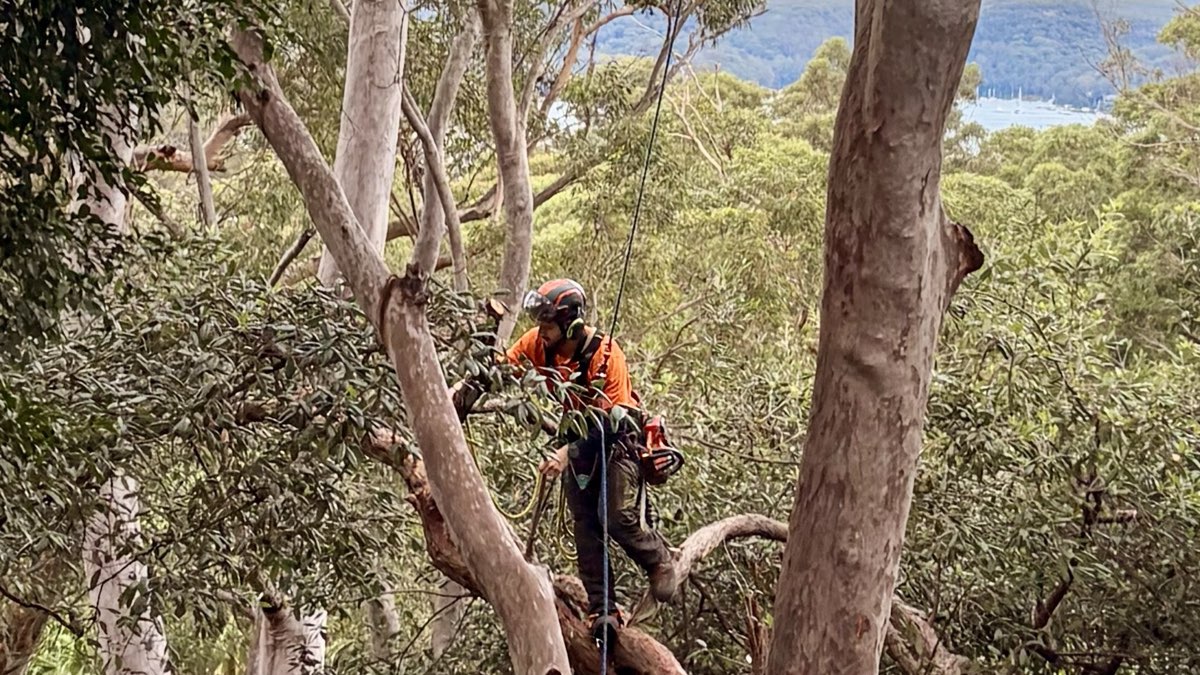
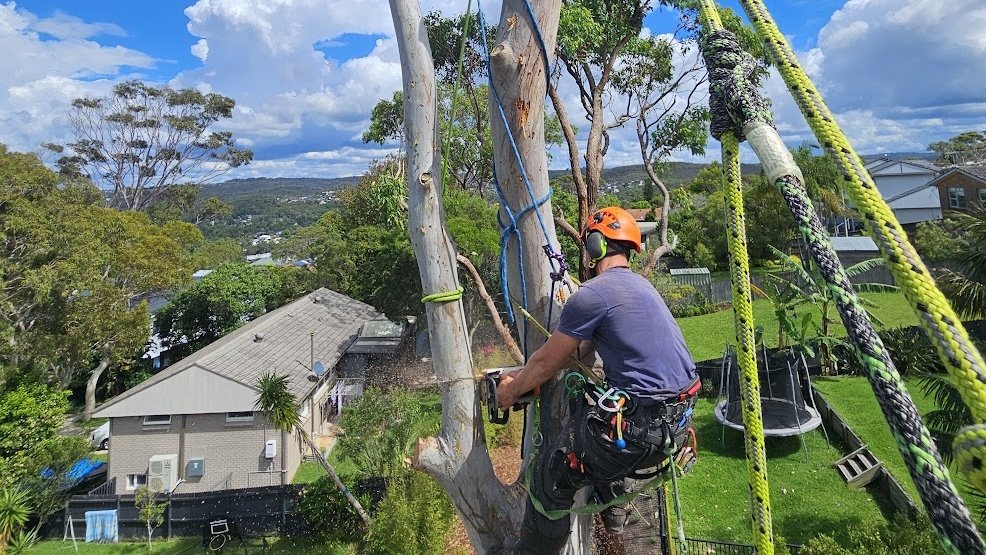
Safe, efficient removal of trees of all sizes — including technical rigging, sectional dismantling and crane-assisted work.
Crown reduction, deadwooding, formative pruning and clearance work — all to AS 4373-2007 standard on every job.
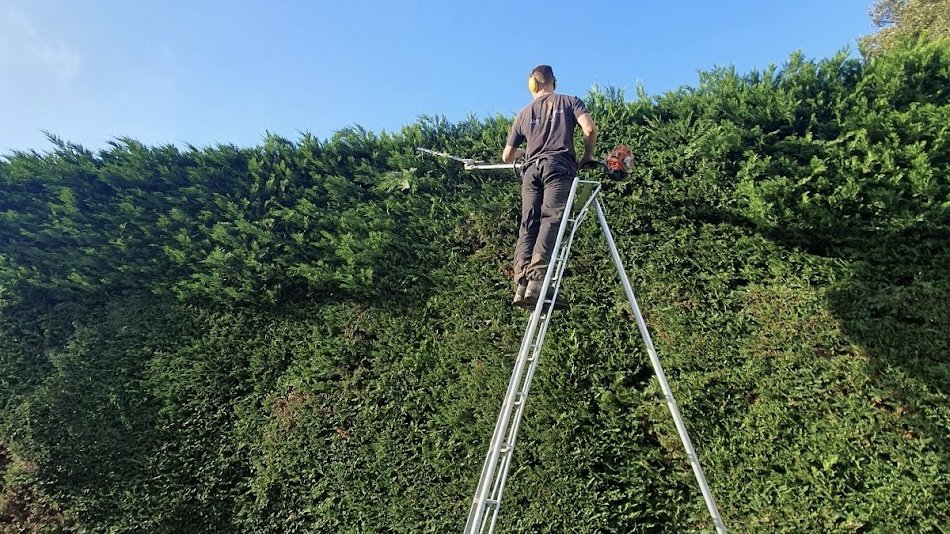
Neat, precise trimming for all hedge types. We remove all clippings and leave a clean finish every time.
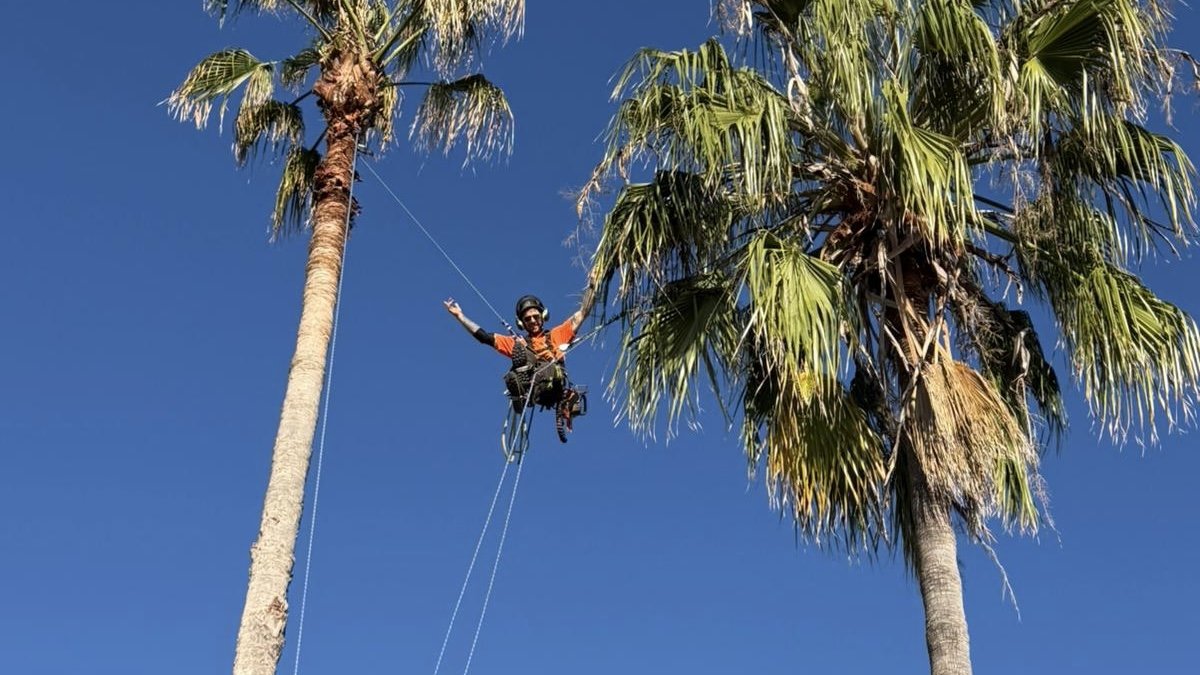
Dead frond removal, seed pod and flower stalk removal — keeping your palms healthy, safe and tidy.
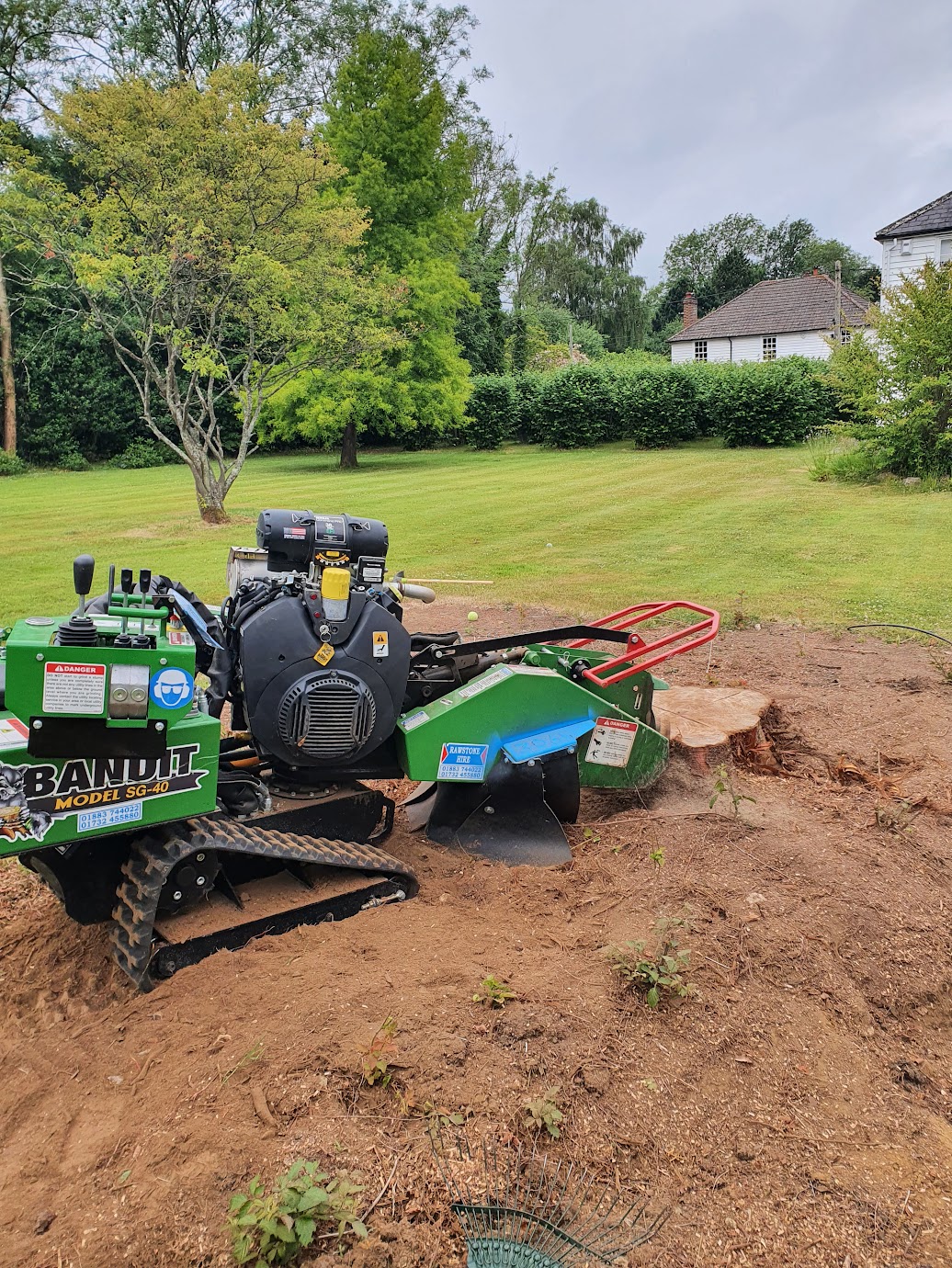
Complete removal below ground level — leaving a clean site ready for turf, landscaping or replanting.
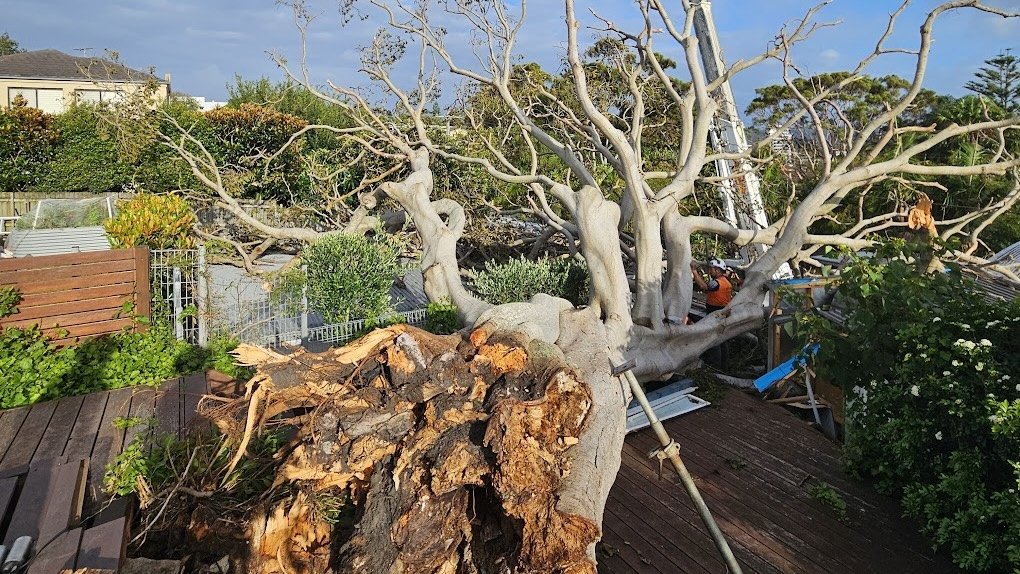
Fast response to storm damage, fallen trees and hazardous situations. Call us first.
Clareville's vegetation reflects the diversity of its terrain — waterfront, hillside and gully habitats all occur within a small area, and each supports different species. On the Pittwater foreshore, Casuarina glauca (Swamp Oak) forms a characteristic fringe, its fine needle-like foliage and distinctive seed cones recognisable from the water. Melaleuca quinquenervia (Broad-leaved Paperbark) occurs in damper ground near the water, along with occasional Eucalyptus botryoides (Bangalay) which tolerates the sandy, saline soils near the shore better than most eucalypts. These foreshore species are ecologically significant and their removal is subject to stringent assessment under Council's DCP.
On the elevated sandstone ground above the waterfront, Angophora costata (Sydney Red Gum) dominates the canopy. Older specimens in Clareville can have very wide crowns given the decades they have had to develop on large, uncleared blocks. Banksia serrata and Banksia integrifolia appear in the understorey and mid-storey. In the more sheltered gullies, Pittosporum undulatum (Sweet Pittosporum) becomes dominant, along with Acmena smithii (Lilly Pilly) and various Acacia wattles. Introduced ornamentals in established gardens include large Jacarandas, Ficus species and a range of subtropical trees that create a layered, lush garden character in the older sections of the suburb. We work with all of these species and can advise on the management approach that best suits each tree's condition and location.
Northern Beaches Council requires development consent under their Development Control Plan (DCP Part B13 — Tree and Vegetation Management) before removing or significantly pruning any tree that meets one or more of the following thresholds: 5 metres or more in height, a canopy spread of 5 metres or more, or a trunk diameter of 30 cm or more measured at 1 metre above ground level. Applications are submitted through Council's online portal.
In Clareville, the Pittwater foreshore environment adds a layer of complexity to permit applications. Trees on or near the foreshore may be subject to additional environmental assessment. The suburb's older, larger tree specimens — many of which are well in excess of the permit thresholds — will almost certainly require consent before any significant work. We advise on permit requirements as part of every site visit and can prepare the supporting arborist reports needed for Council applications.
Don't take our word for it — here's what our customers have said.
"We found Alex and his team very friendly and helpful. They provided a professional service and we are very pleased with their work. We will definitely use them again."
"Amazing level of service. Polite, efficient, knowledgeable, professional and exceedingly hardworking. Lovely guys. Would not hesitate to use again and will definitely recommend to others."
"Fantastic job! They turned up on time, worked fast, tidied up and did a great job all round. These guys will be my go-to now to keep the trees and hedges in order. I HIGHLY recommend."
Can trees on the Pittwater foreshore be removed?
It's possible, but foreshore trees are subject to particularly careful assessment by Northern Beaches Council because of the ecological values of the Pittwater environment. Casuarina glauca (Swamp Oak) and other foreshore species are recognised as significant vegetation, and removal applications need to demonstrate genuine justification — structural failure risk or documented safety hazard — rather than simply wanting more water views. We will assess the tree and advise honestly on whether an application is likely to be approved before you invest in the process.
I have an old Jacaranda that's dropping large limbs — what should I do?
Get it assessed. Older Jacarandas can develop structural issues as they age, particularly at branch unions where co-dominant stems have formed. Dropping limbs may indicate decay at junctions, waterlogged wood, or simply the weight-to-strength ratio changing as the tree ages. In many cases, strategic crown reduction and removal of the specific limbs at risk is the answer. If the tree is structurally sound in its main scaffold, targeted work can extend its life significantly. We'll inspect it properly and give you a clear recommendation.
How do you handle work on steep hillside properties in Clareville?
Steep terrain is something we manage regularly across the Northern Beaches. On hillside properties at Clareville, we use rigging systems to control the descent of cut material, work from above or below depending on the configuration, and in some cases use a small crane for precise placement of heavy sections. We assess the site access and terrain carefully during the quoting visit and explain our approach before any work starts.
Is the site visit free?
Yes. We come to the property, assess the trees and provide a written quote with no charge and no obligation. Clareville's varied terrain and older tree stock mean we prefer to see every job in person — it's the only way to give you an accurate price and a realistic picture of what's involved.
We work regularly across Clareville and the surrounding Northern Beaches. Call us directly or send an enquiry and we'll come to you, assess the job and give you a clear, honest price.
0452 030 077