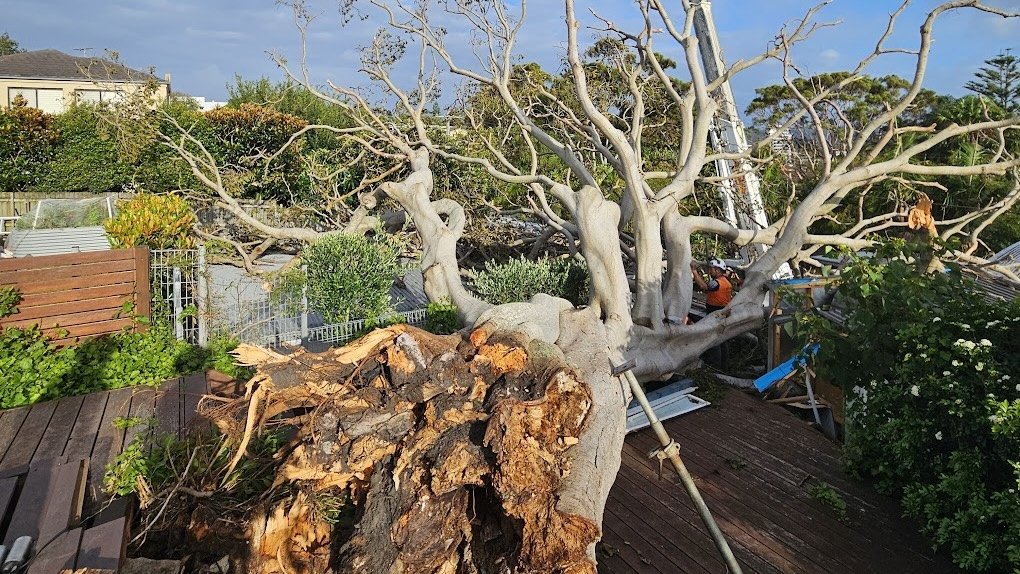
Specialist arboricultural services for Elanora Heights' large blocks, elevated sandstone terrain and Garigal National Park interface. Based 5 minutes away in North Narrabeen.
Elanora Heights is one of the most elevated and leafy suburbs on the Northern Beaches — a ridgeline suburb sitting above the coastal plain, bounded to the north and west by Garigal National Park. Streets like Lorikeet Drive, Kalinda Road, Elanora Drive and Totala Place wind through large residential blocks that retain substantial native bushland. It is a suburb that demands a genuinely experienced arborist: the canopy here is significant, blocks are large, and the interface with Garigal NP creates both high ecological value and elevated bushfire risk that must be carefully managed.
The Living Canopy is based in North Narrabeen — approximately 5 minutes from Elanora Heights. We work here regularly. We understand that trees on these properties are often established specimens of considerable size and ecological importance, and that any work needs to be properly assessed before it begins. The elevated ridgeline position also affects tree stability: trees in Elanora Heights frequently develop pronounced lean and asymmetrical crowns from consistent southerly and south-westerly wind loading. Structural assessment matters here.
The sandstone substrate throughout Elanora Heights means root systems often grow laterally along rock fractures rather than establishing deep vertical anchorage. This can create unexpected instability in older specimens, particularly after prolonged dry periods. We carry out a thorough site assessment before every major job — it is not optional, and it is not something you should skip when dealing with trees of this size on rocky terrain.
Full arboricultural services for Elanora Heights' large blocks and Garigal NP-interface properties.
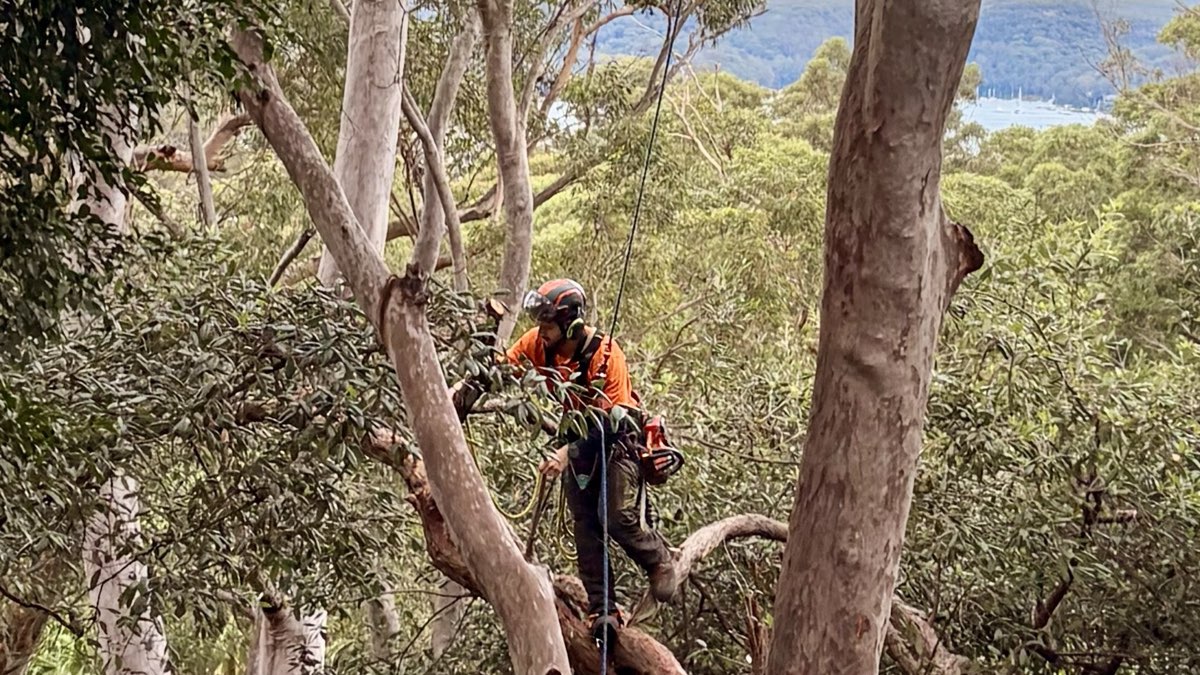
Safe, efficient removal of trees of all sizes — including technical rigging, sectional dismantling and crane-assisted work on large Angophoras and Eucalypts.
Crown reduction, deadwooding, formative pruning and structure clearance — all to AS 4373-2007 standard on every job.
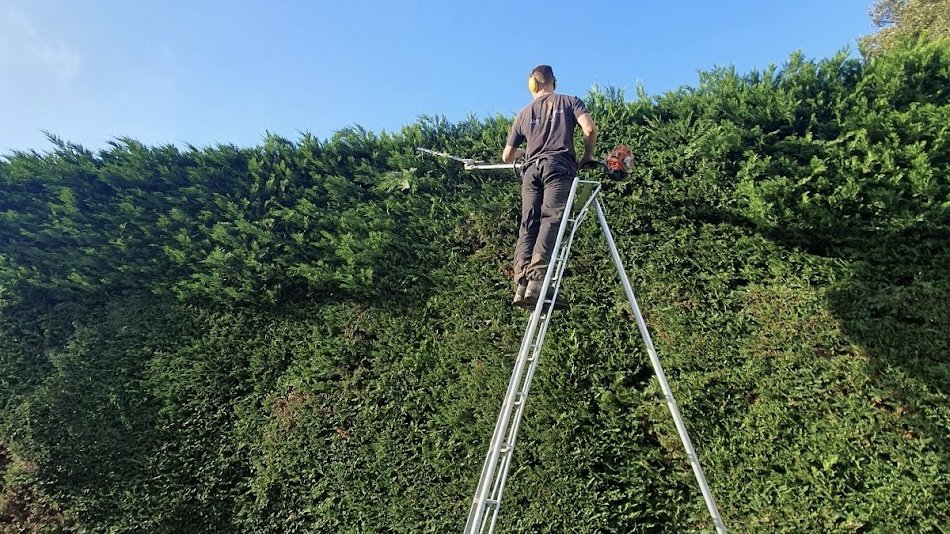
Neat, precise trimming for all hedge types. We remove all clippings and leave a clean finish every time.
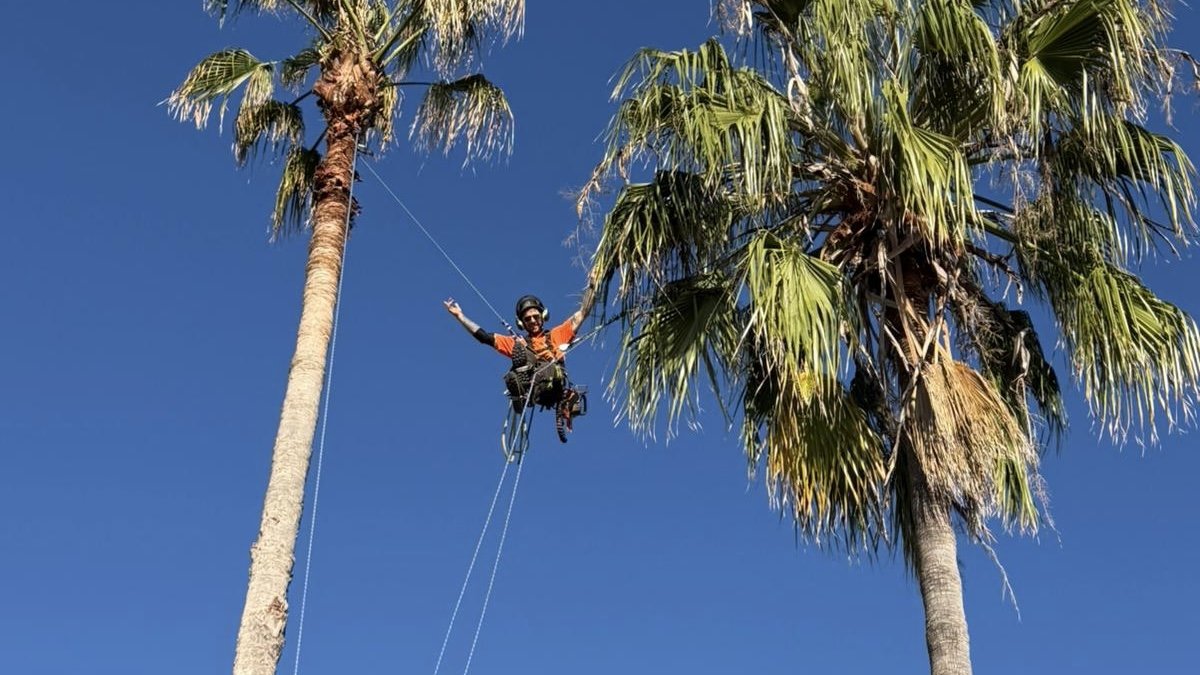
Dead frond removal, seed pod and flower stalk removal — including Livistona australis (Cabbage Palm) common in Elanora Heights gullies.
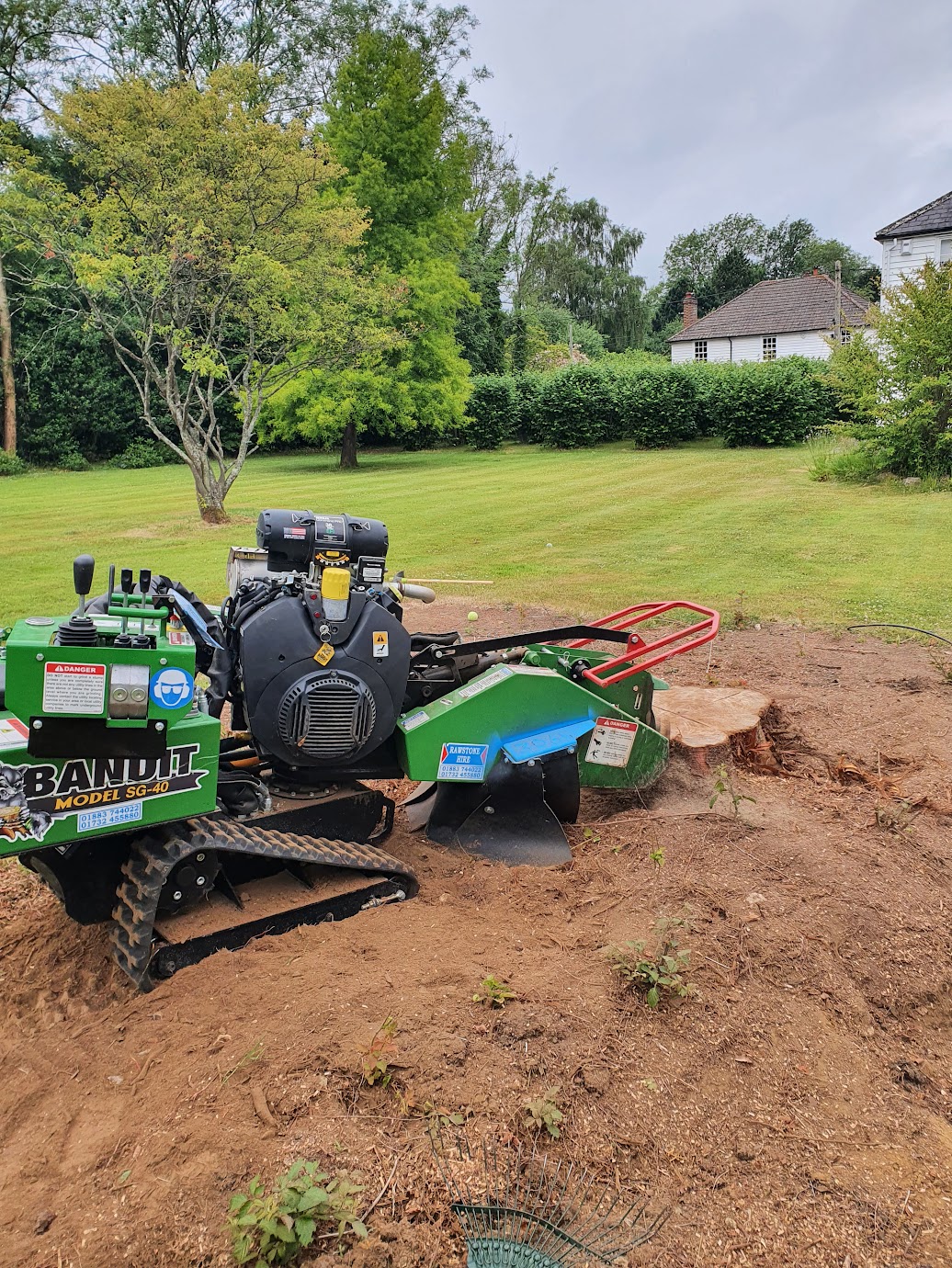
Complete removal below ground level — leaving a clean site ready for turf, landscaping or replanting.
Fast response to storm damage, fallen trees and hazardous situations. Elanora Heights' ridge position makes it vulnerable to storm events — call us first.
Elanora Heights sits on a sandstone ridge at the edge of Garigal National Park, and its vegetation reflects this — dry sclerophyll bushland dominated by species that have evolved for poor soil, shallow rock and periodic fire. Angophora costata (Sydney Red Gum) is the defining tree of this suburb: smooth salmon-coloured bark, gnarled limbs, and specimens that reach considerable age and size on properties backing onto the National Park. Corymbia gummifera (Red Bloodwood) is common throughout the ridge, identifiable by its distinctive box-like bark and clusters of urn-shaped fruit. Eucalyptus robusta (Swamp Mahogany) appears in the moister gully lines and lower slopes, growing rapidly and reaching large dimensions.
The understorey is dominated by Banksia integrifolia (Coast Banksia) and Banksia serrata (Old Man Banksia), both significant wildlife habitat trees that Northern Beaches Council values highly. In the sheltered gullies leading down toward Narrabeen Lagoon, Livistona australis (Cabbage Tree Palm) — one of NSW's only native palms — grows naturally. These are protected native palms that require permits even for significant pruning work.
Root systems in Elanora Heights are shaped by the sandstone substrate. Rather than growing vertically, roots often follow rock fractures laterally across the surface. This creates a distinctive anchoring pattern that can be misleading — a tree that appears healthy and well-established may have surprisingly shallow root spread, particularly after drought stress. On properties along Lorikeet Drive, Kalinda Road and Elanora Drive where large specimens grow close to structures, this makes professional structural assessment especially important before any significant work.
Elanora Heights falls within Northern Beaches Council's jurisdiction. DCP Part B13 (Tree and Vegetation Management) requires development consent before removing or significantly pruning any tree that is 5 metres or more in height, has a canopy spread of 5 metres or more, or a trunk diameter of 30 cm or more at 1 metre above ground. Given the size of the established native canopy throughout Elanora Heights — Angophoras, Corymbia, Eucalyptus — the vast majority of trees on residential properties will require a permit.
The proximity to Garigal National Park also means some properties have additional biodiversity overlays that affect what can be removed and how. Northern Beaches Council takes unauthorised tree removal seriously — fines for individuals can reach $110,000. We assess permit requirements at the quoting stage and can advise on the application process. Learn more on our Northern Beaches tree permit guide.
Elanora Heights is one of the highest bushfire-risk suburbs on the Northern Beaches. We understand the rules — and we can help you comply with them properly.
Properties in Elanora Heights that are in Bush Fire Attack Level (BAL) zones — BAL-12.5, BAL-19, BAL-29 or higher — are typically required to maintain an Asset Protection Zone between their structure and the surrounding vegetation. APZ maintenance is not optional: it is a condition of occupying properties in these areas, and failure to maintain your APZ can affect your home insurance and expose you to liability.
APZ work involves clearing ground-level fuel (leaf litter, grass, fallen branches), thinning dense shrub layers to reduce fire connectivity, maintaining separation between tree canopies and roof structures, and selectively removing vegetation within the designated zone. It is governed by the NSW RFS Specifications for Asset Protection Zones. We carry out APZ maintenance to the correct standard — not just rough clearing, but properly considered vegetation management that meets RFS requirements.
Much of Elanora Heights falls within the NSW 10/50 entitlement area due to its proximity to Garigal National Park and mapped bushland. The 10/50 code allows eligible property owners to clear trees within 10 metres of an approved dwelling and shrubs within 50 metres — without a council permit. This is a significant entitlement for Elanora Heights homeowners.
However, 10/50 does not mean you can simply remove whatever you like. The code has specific requirements about how work must be done, what must be retained, and what qualifies as an "approved dwelling." Work must also be carried out safely. We check your property's eligibility, confirm what qualifies under the code, and carry out the clearing correctly — so you get the benefit without the risk of non-compliance.
Check your property's 10/50 eligibility on the NSW RFS website →
Don't take our word for it — here's what our customers have said.
"We found Alex and his team very friendly and helpful. They provided a professional service and we are very pleased with their work. We will definitely use them again."
"Amazing level of service. Polite, efficient, knowledgeable, professional and exceedingly hardworking. Lovely guys. Would not hesitate to use again and will definitely recommend to others."
"Fantastic job! They turned up on time, worked fast, tidied up and did a great job all round. These guys will be my go-to now to keep the trees and hedges in order. I HIGHLY recommend."
Do I need a council permit to remove a gum tree in Elanora Heights?
Yes, in most cases. Northern Beaches Council requires development consent before removing or significantly pruning any tree that is 5 metres or more in height, has a canopy spread of 5 metres or more, or a trunk diameter of 30 cm or more at 1 metre above ground. The Angophora costata, Eucalyptus and Corymbia species common in Elanora Heights almost always exceed these thresholds. We check permit requirements at the quoting stage and can advise on the process. See our full Northern Beaches permit guide.
What is the 10/50 rule and does it apply to my Elanora Heights property?
The NSW 10/50 Vegetation Clearing Code allows eligible property owners to clear trees within 10 metres of an approved dwelling and shrubs within 50 metres — without a council permit. Much of Elanora Heights falls within the designated 10/50 entitlement area due to its proximity to Garigal National Park. You can check your property's eligibility at the NSW RFS website. Even where 10/50 applies, work must be done safely and correctly — we confirm eligibility, identify what qualifies, and carry out the clearing to the required standard.
My property is in a bushfire zone — what does APZ maintenance actually involve?
Asset Protection Zone maintenance involves managing the vegetation around your structure to reduce the fuel load and slow any approaching fire. This means clearing ground-level fuel (leaf litter, grass, fallen branches), thinning dense shrub layers, maintaining separation between tree canopies and your roof structure, and selectively removing vegetation within the designated zone. It is governed by the NSW RFS Specifications for Asset Protection Zones and Northern Beaches Council's DCP. We carry out APZ work across Elanora Heights and surrounding BAL-rated suburbs — we assess what is needed and do it correctly.
Can you work on steep and rocky terrain like the blocks in Elanora Heights?
Yes. Sandstone slopes, rocky outcrops and uneven terrain are routine for us. We use single rope technique (SRT) climbing systems, appropriate rigging and controlled lowering setups to bring sections down safely where conventional felling is not possible. Every job starts with a proper site assessment so we plan the right approach before any work begins.
The trees on my block are very large established specimens — can you handle them?
Yes. Large, mature Angophoras, Eucalyptus and Corymbia trees are a routine part of what we do. Alex has over a decade of experience on significant trees across the UK and Australia — including National Trust estate work in the UK, which involved some of the most technically demanding pruning and removal imaginable. Sectional dismantling, technical rigging and crane coordination are all within our capability.
How do I know if a tree on my property is dead or becoming dangerous?
Key signs to watch for: no leaf growth when surrounding trees are in full leaf; significant bark shedding without the smooth regrowth typical of Angophora; fungal fruiting bodies (bracket fungi) at the base or on major limbs; hollow or soft wood when probed; major structural cracks in the trunk or scaffold branches. Shallow root systems on sandstone can also cause sudden decline after drought. If you are unsure, call us — we carry out an assessment and give you an honest answer about what the tree actually needs.
How far away are you from Elanora Heights?
We are based in North Narrabeen — approximately 5 minutes from Elanora Heights. We work here regularly and can usually arrange a site visit within a day or two of your enquiry. Call us on 0452 030 077 or send an enquiry through our contact page.
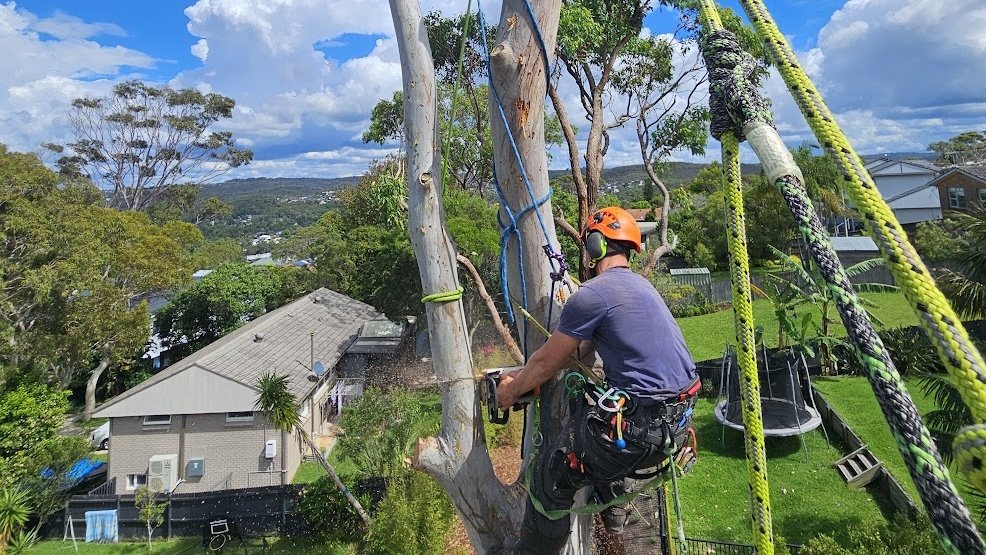
Call us directly or send an enquiry. We'll visit your property, carry out a proper site assessment and give you a clear, honest quote. Based in North Narrabeen — 5 minutes away.
0452 030 077