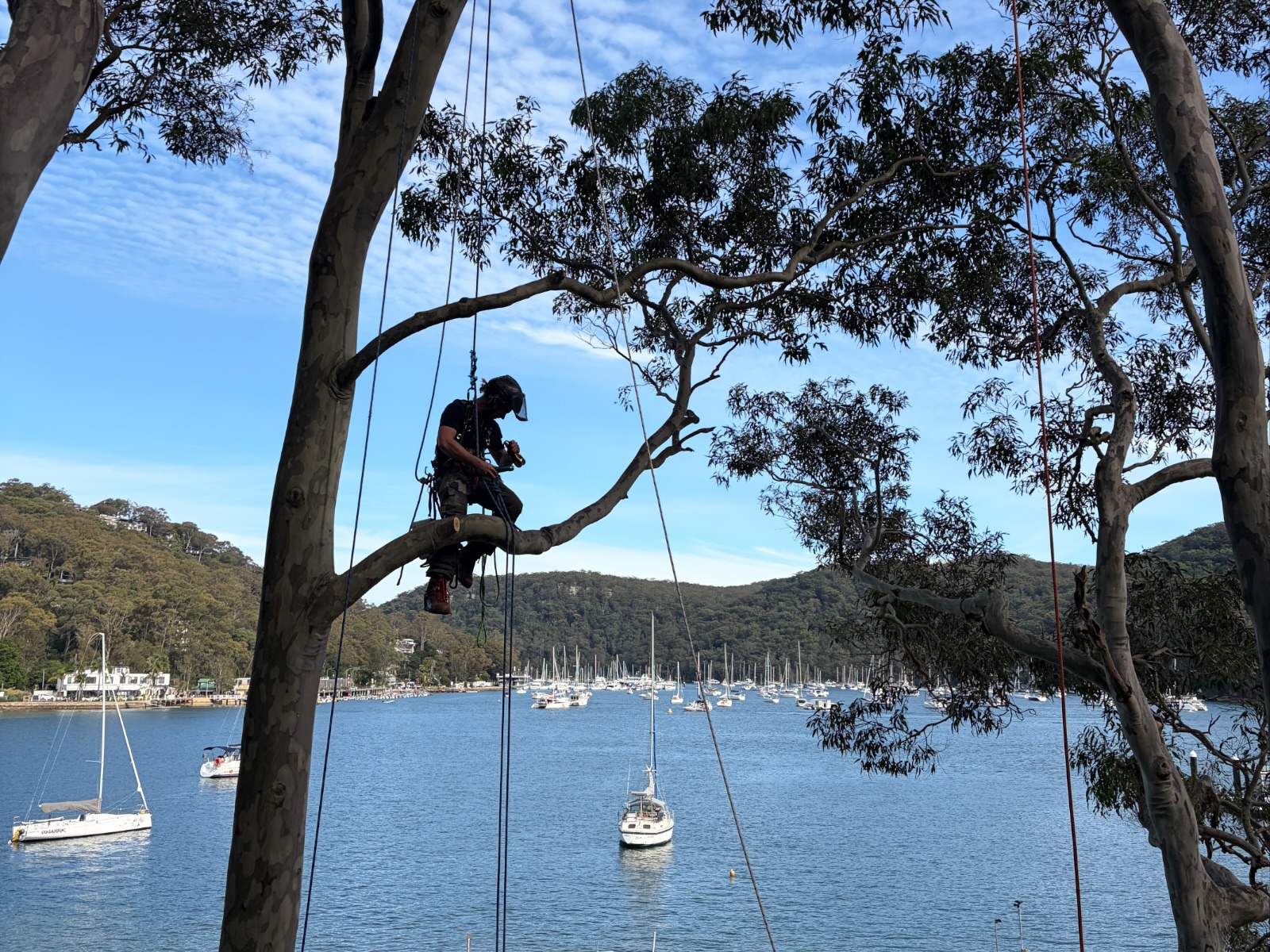
One of the very few arborists who actually turn up on Scotland Island. We cross by water taxi, and when the job needs it we barge the truck and wood chipper over. Tree removal, pruning and bushfire prep for the Pittwater offshore community.
Scotland Island sits in the middle of Pittwater, a short hop off Church Point, and it is unlike anywhere else we work on the Northern Beaches. There is no bridge. There are no roads for cars. You get here by the Church Point ferry, by private boat, or by water taxi, and if you want a vehicle on the island the only way it arrives is on a barge. That single fact is the reason most tree companies quietly say no to Scotland Island jobs. The access scares them off.
We look at it the other way around. For most jobs we simply hop on the water taxi from Church Point with our climbing gear, saws and hand tools, and we are up in the canopy within the hour. When a job is bigger, or when there is a lot of timber and green waste to take off the island, we book a vehicular barge and bring the whole rig across the water, truck, wood chipper and all. Once the gear is on the ground we work exactly the way we would anywhere else, we just have to plan the crossing and the tides around it.
That planning is where local knowledge earns its keep. We know how the Church Point wharf works, where a barge can safely land and be unloaded on the island foreshore, and how to time a crossing so the whole team and the gear arrive together rather than half the day being lost to logistics. If you live on Scotland Island you already know how much harder it is to get a tradie to actually show up. We are the arborist who shows up.
Around 700 people call the island home, most of them on blocks that fall away steeply to the water, tucked into thick native bushland with jetties and moored boats below. It is beautiful, and it is a genuinely challenging place to work a tree safely. We would not have it any other way.
This is a short clip from a recent pruning job on Scotland Island, up in a spotted gum with the moored yachts and jetties below. It gives you a feel for the terrain, the access and the way we work over the water.
Roped high in the canopy on a steep foreshore block, with the boat below waiting to take the gear back across to Church Point.
On the mainland, the logistics end when the tree is on the ground. On Scotland Island that is where a lot of the work really begins, because nothing can be tipped or burnt on the island and every branch we cut has to leave by water. This is exactly the part that catches out operators who do not work here regularly, and it is the reason it pays to use someone who has done it dozens of times.
Where we have the wood chipper barged across, we chip the smaller material on site and either reuse the chip on your garden beds and paths or bag it and carry it off. The larger stuff, meaning trunk sections, big limbs and full logs, is cut down to a size we can move by hand down to the foreshore, then loaded onto the barge and taken back to the mainland for proper disposal or milling. It is heavier, slower work than a kerbside job, but it is the only way to leave an island block clean.
Because the removal is the awkward part, we build it into the quote from the start. You will see the access and the off-island disposal costed clearly rather than sprung on you at the end. No island homeowner should be left with a pile of logs on a foreshore block and no way to shift them.
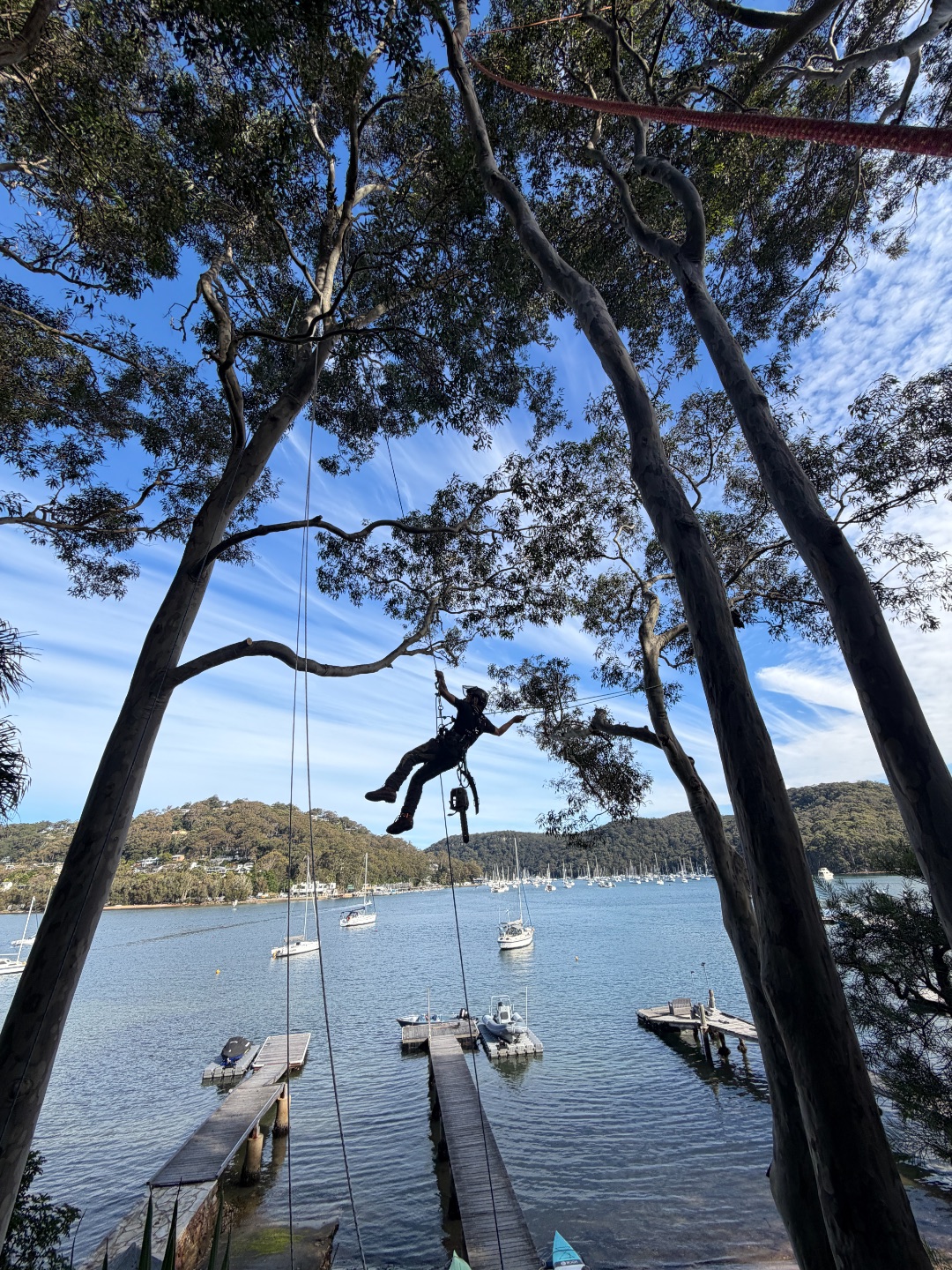
Every tree service you need on an offshore block, carried out by a qualified arborist who brings the right gear across the water.
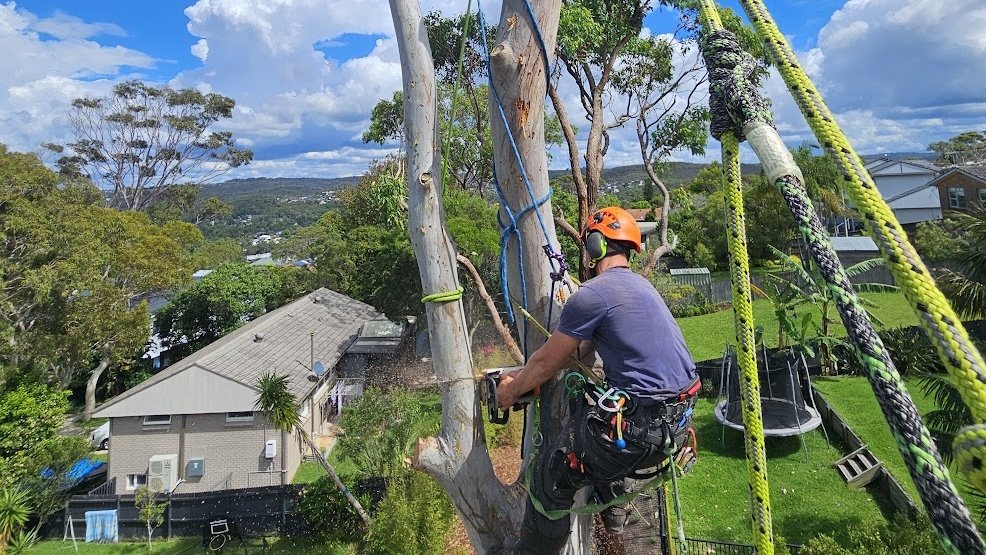
Sectional dismantling and rigging on steep foreshore blocks, with all timber barged off the island. No tipping or burning on site.
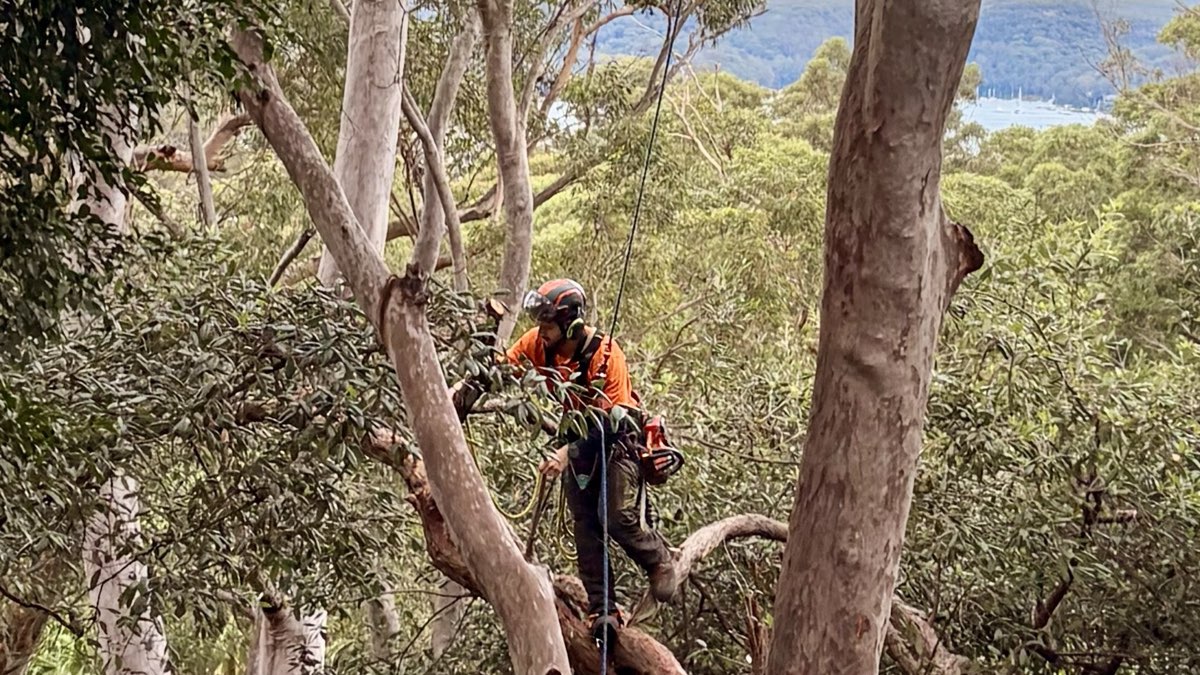
Crown reduction, dead-wooding and view and clearance pruning on angophoras and spotted gums, all to AS 4373-2007 standard.
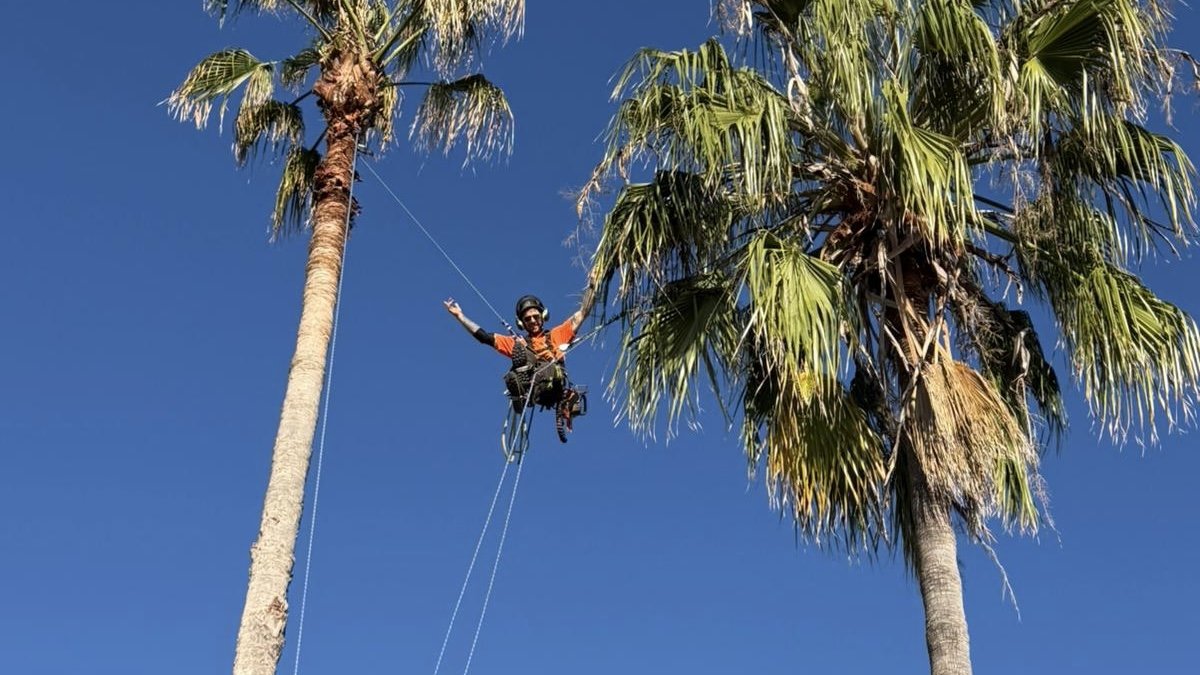
Cabbage tree palm and Cocos palm maintenance: dead frond, seed pod and flower stalk removal on island gardens.
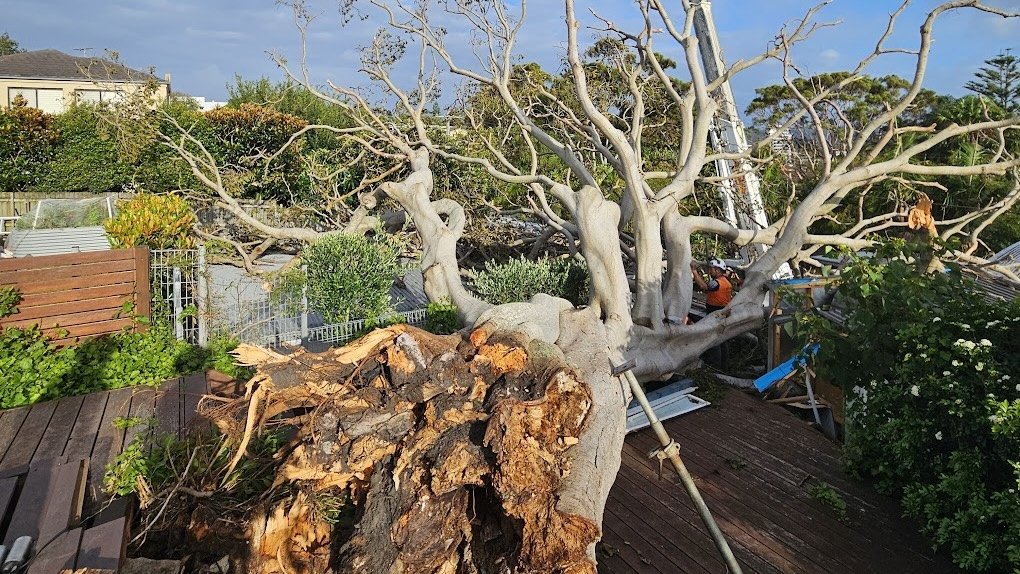
Fast response to fallen trees and storm-damaged limbs on the island, coordinated around water taxi and barge access.
Scotland Island is bushfire-prone, and it is not hard to see why. Almost every home sits directly against native bushland, on a steep block, with only the water between the island and the mainland brigades. Managing the fuel load around your house is one of the most valuable things you can do here, and it is work we take seriously.
We carry out canopy separation to break up continuous fuel, dead-wooding to strip out the dry standing material that carries fire, and understorey and fine-fuel reduction to clear the ladder fuels that let a ground fire climb into the canopy. Around the house we can establish and maintain an asset protection zone so there is defendable space between the bush and your walls. It is measured, considered work that reduces risk without stripping a block of the very bushland that makes island living what it is.
Northern Beaches Council runs a dedicated fine-fuels green-waste collection for the offshore communities of Scotland Island, Mackerel Beach and the Western Foreshore, which gives island residents a genuine way to get fine bushfire fuel off their blocks. We can prune, clear and prepare material to tie in with that collection, so the fuel you have paid to reduce actually leaves the island rather than sitting in a heap.
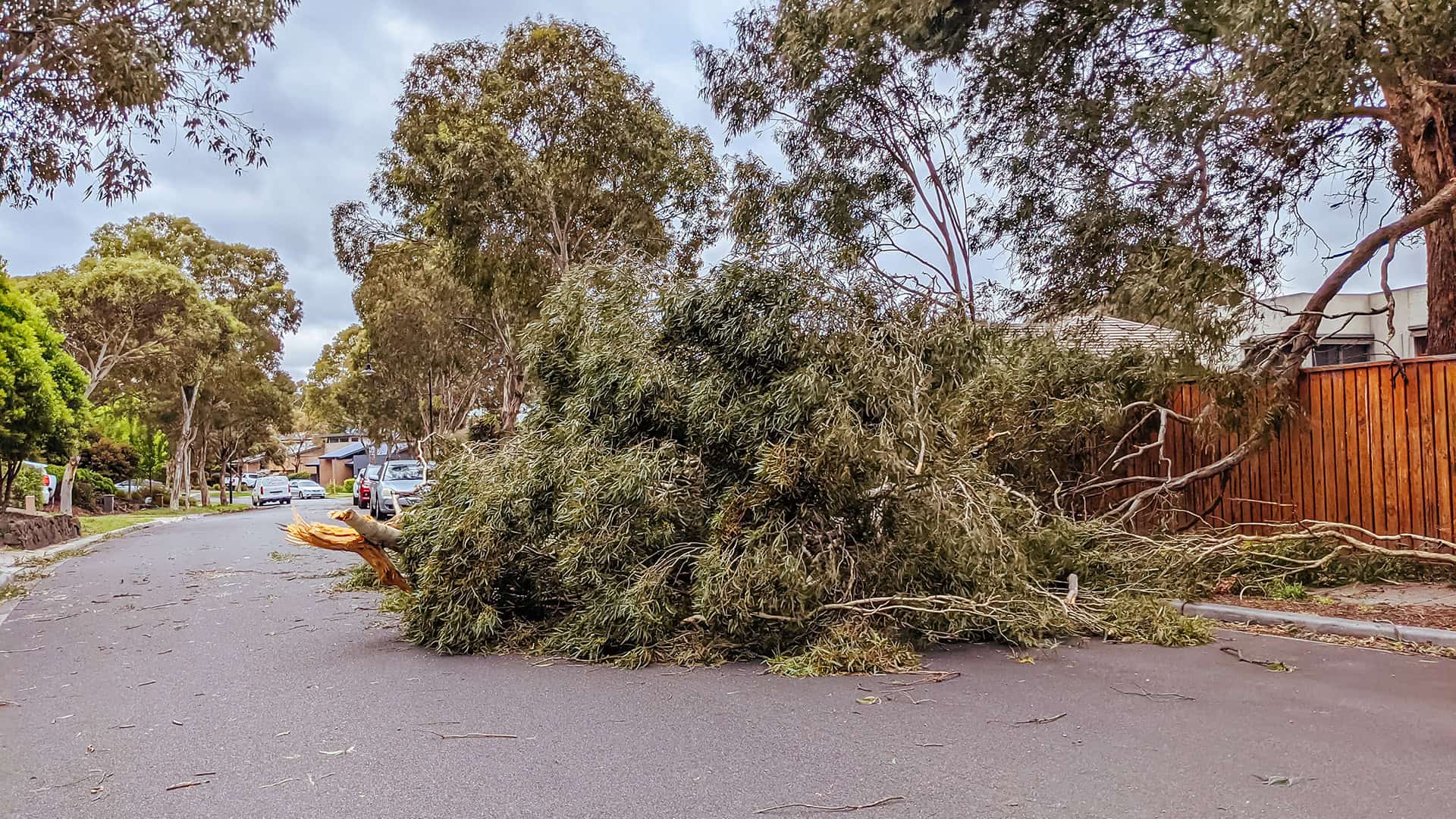
Scotland Island's vegetation is classic Sydney sandstone foreshore bush, and it is a big part of what makes the island so distinctive. Angophora costata (Sydney Red Gum) is everywhere, its smooth, sculptural orange-pink trunk leaning out over the water one of the defining sights of Pittwater. Corymbia maculata (Spotted Gum) is the other tall canopy tree you will see across the island, straight-trunked and vigorous, often the species we are roped into when a foreshore block needs pruning for views, clearance or safety.
Alongside them, Eucalyptus pilularis (Blackbutt) reaches serious size on the deeper soils of the island's higher ground, and mature specimens need careful assessment before any work near a house. Down through the understorey and along the damper gullies, Livistona australis (Cabbage Tree Palm) is a signature of the island, along with a scatter of banksias, casuarinas and the exotic Cocos palms that have crept into many gardens over the decades. Working here means respecting that bushland setting. Most of these trees are mature, protected and doing exactly what they should be, so our default is always to retain and manage them rather than remove.
Scotland Island is part of the Northern Beaches Council LGA, so the same Development Control Plan (DCP Part B13, Tree and Vegetation Management) applies here as on the rest of the peninsula. Development consent is generally required before removing or significantly pruning any tree that is 5 metres or more in height, has a canopy spread of 5 metres or more, or a trunk diameter of 30 cm or more measured at 1 metre above ground level.
Given the island's bushland character, the vast majority of mature trees, angophoras, spotted gums, blackbutts and cabbage tree palms among them, are protected and will need approval before any significant work. Penalties for unauthorised removal are substantial. As your arborist, we assess permit requirements at the quote, advise honestly on whether consent is needed, and can prepare an arborist report to support your council application. See our Northern Beaches permit guide for the detail.
How do you get to Scotland Island for tree work?
For most jobs we come across on the water taxi from Church Point with our climbing gear, saws and hand tools. When a job needs the truck and wood chipper, or when we have large volumes of timber and green waste to take off the island, we book a vehicular barge and bring the whole rig over. Scotland Island has no bridge, no roads for cars and no vehicular access other than by barge, which is the single biggest reason most arborists never quote here. We do it week in, week out.
How do you remove green waste and logs from the island?
Nothing can be tipped or burnt on the island, so everything we cut has to leave by water. Smaller green waste is chipped on site when we have the chipper barged over, and the chip is either reused on the property or bagged and taken off. Larger logs and trunk sections are cut to a size that can be carried down to the foreshore, loaded onto the barge and taken back to the mainland for disposal or milling. We factor the barge and removal into the quote so there are no surprises.
Is offshore tree work more expensive?
There is an offshore access component, because we have to book and pay for the water taxi or the vehicular barge and allow extra time for loading and getting the gear across the water. That said, we do enough work on Scotland Island and the Pittwater offshore communities to keep it sensible, and we are usually far more competitive than the few operators who treat an island job as a one-off. You get a clear written quote up front with the access and removal costs included.
Can you do bushfire hazard reduction and fine-fuel clearing on the island?
Yes. Scotland Island is bushfire-prone and most homes sit right against native bushland, so managing the fuel load around the house matters. We carry out canopy separation, dead-wooding, understorey and fine-fuel reduction and asset protection zone work. Northern Beaches Council runs a dedicated fine-fuels green-waste collection for offshore residents at Scotland Island, Mackerel Beach and the Western Foreshore, and we can prune and prepare material to tie in with that service.
Do I need a council permit to remove a tree on Scotland Island?
In most cases, yes. Scotland Island is in the Northern Beaches Council LGA and the same Development Control Plan applies. Any tree 5 metres or taller, with a canopy spread of 5 metres or more, or a trunk diameter over 30 cm at 1 metre from the ground generally needs consent before removal or significant pruning. Given the bushland setting, most mature trees on the island are protected. We assess permit requirements at the quote and can prepare an arborist report to support an application.
Servicing Scotland Island and the Pittwater offshore communities. Call us directly and we will sort the water taxi or barge, come across, assess the job and give you a clear, honest price with the access included.
0452 030 077