How we work
Climbing tall trees over bushland gardens
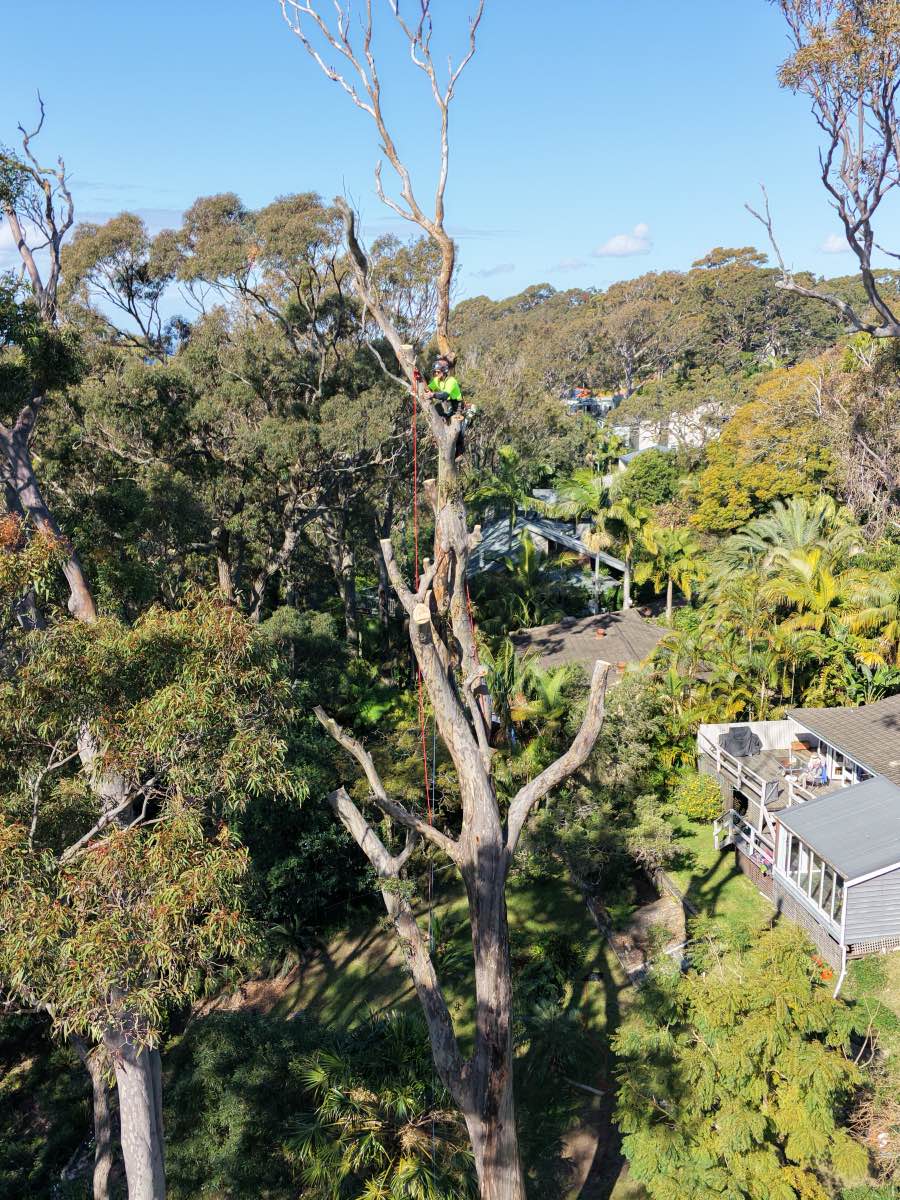
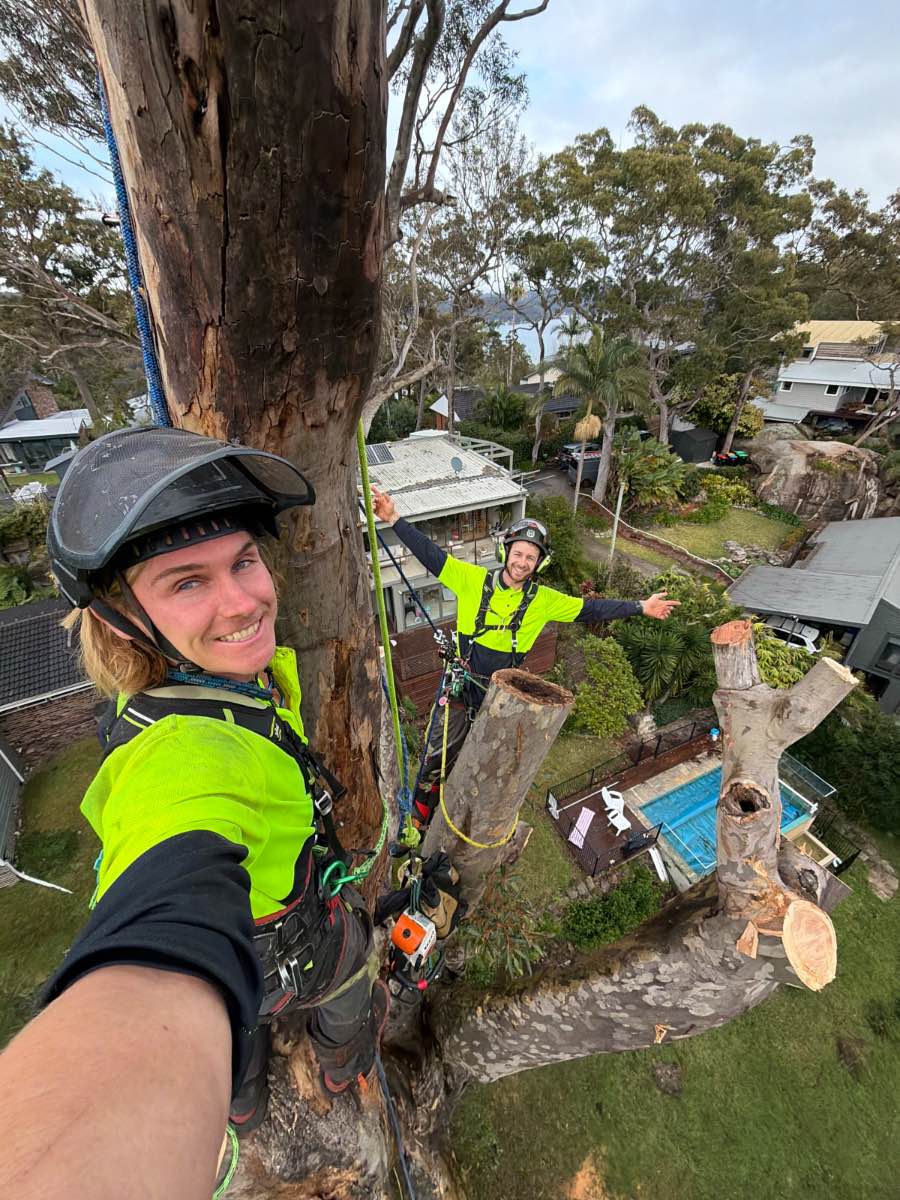
Lane Cove has the strictest tree rules on the North Shore. Even a dead branch needs a permit here. We work across Lane Cove from North Narrabeen, and Alex quotes every job himself and walks you through the paperwork.
What counts as a protected tree. Lane Cove Council protects any woody plant, native or exotic, that is more than 4 metres tall, has a canopy spread of more than 5 metres, or has a trunk diameter of more than 150 mm measured 1 metre above the ground. Trees in bushland are protected too. A 150 mm trunk is a modest tree, so most established garden trees in Lane Cove are covered.
There are no real exemptions. Council doesn't allow the 10% pruning that some councils permit without asking. Pruning a dead branch, removing a dead tree, pruning near power lines and working on exempt species all still need a permit. For those jobs it's a Fee-Free Tree Works permit, so there's no charge, but you still apply and wait for it. The only exception is bamboo, which council says can be removed without consent.
Fees and timing (2026/27). An application costs $160 for one to three trees, plus $35 for each extra tree. Council allows up to 8 to 10 weeks for a decision, or usually 1 to 2 weeks for fee-free works. A permit is valid for 12 months.
48 hours' notice. Once you have a permit, council must be told at least 48 hours before work starts, with the name and details of the AQF Level 3 arborist doing it.
Bushland and heritage. If the tree is part of an endangered ecological community mapped on the NSW Biodiversity Values Map, the application goes to the NSW Native Vegetation Panel, not to council. On a heritage item or in a heritage conservation area, removing a tree needs a development application.
Reports. To remove a living tree for safety or damage reasons, council will often ask for a report from a consulting arborist (AQF Level 5), along with evidence from a plumber, engineer or builder. We can point you to an independent consultant.
Source: Lane Cove Council, Tree Preservation Order, with council's Trees FAQs and Fee-Free Tree Works Permit pages. Checked October 2026.
Lane Cove's process has one more step than most councils. Here's the order it happens in, and where we come in.
Alex measures it against the 4 metre, 5 metre and 150 mm triggers, checks the species against council's fee-free list, and tells you whether it can be kept with pruning.
The application goes through council's Private Tree Works Inspection form. Council asks for photos of the whole tree with a person beside it for scale, plus close-ups of the bark, leaves and fruit.
A council tree officer looks at the tree and decides. Fee-free works usually come back in 1 to 2 weeks. Paid applications can take up to 8 to 10 weeks.
At least 48 hours before the work day, council is emailed the date and the AQF 3 arborist's details. We give you everything you need for that email.
We carry out exactly what the permit allows, to AS 4373, within its 12 months. If the permit says part of a dead tree must stay for habitat, that part stays.
Lane Cove Council looks after about 90 hectares of bushland, and a lot of houses back onto it. Council lists six endangered ecological communities in the area: Coastal Saltmarsh, Estuarine Swamp Oak Forest, Coastal Freshwater Swamp Forest, Coastal Escarpment Littoral Rainforest, Blue Gum High Forest and Sydney Turpentine-Ironbark Forest. The last two are critically endangered under Commonwealth law.
The saltmarsh and swamp oak forest sit along the edge of the Lane Cove River estuary. Coastal Escarpment Littoral Rainforest follows almost every creek, on clay soils that come from shale layers, usually under a tall canopy of Eucalyptus saligna (Sydney Blue Gum), Eucalyptus pilularis (Blackbutt) or Syncarpia glomulifera (Turpentine). Lane Cove Bushland Park even has a fungi community, at least 27 species of Hygrocybeae, that is listed as critically endangered under NSW law.
That's the reason council is careful. It's also why we start every Lane Cove quote by asking whether the tree can stay. A tall blue gum dropping dead limbs over the deck can often be fixed by taking the deadwood out under a fee-free permit. If removal is the right answer, Alex will explain why, and what council is likely to want to see.
Big trees beside houses, with bush or a neighbour's garden below, mean most of our work here is climbing and rigging. We take trees apart in sections and lower them on ropes, and we keep timber and debris out of the bushland at the bottom of the block.
Some species on council's fee-free list only qualify below a set height. Jacaranda mimosifolia (Jacaranda), Crepe Myrtle, Silky Oak, Box Elder and Phoenix palms are fee-free only under 6 metres. Camphor Laurel, Liquidambar and Evergreen Alder are fee-free under 10 metres.
Others are fee-free at any height, including African Olive, Cocos Palm, Privet, Rubber Tree, Umbrella Tree, Willow, Mulberry, Leighton Green, Celtis and exotic fruit trees.
Fee-free still means applying. Above the size triggers, every one of these needs a Fee-Free Tree Works permit before it's touched. A big Jacaranda over 6 metres is a paid application.
Source: Lane Cove Council, Fee-Free Tree Works Permit. Checked October 2026.
In Lane Cove, a permit to remove a tree is hard won, so it makes sense to finish the job properly. We own our stump grinder, a Bandit SG40, and when the tree comes out the stump can be ground on the same visit. You don't need to book a second contractor or wait for a hire machine.
The grinder is 74 cm across the tracks, so it goes through a standard side gate. That matters on the steep, narrow blocks that run down towards the bush, where a wider machine can't get past the house.
Ground conditions vary across the suburb. Along the creek lines the soil is often clay that came from shale. We look at the ground at the quote, and after heavy rain we may move the day so the machine doesn't churn up a wet garden. Where the stump sits on rock, the grinder can only go as deep as the rock allows, and we'll tell you that before we start.
On blocks that back onto bushland, we keep the grindings in your garden and out of the reserve. A single old stump on its own is worth calling about too. More about stump grinding
Each one done the way Lane Cove's permit rules require.
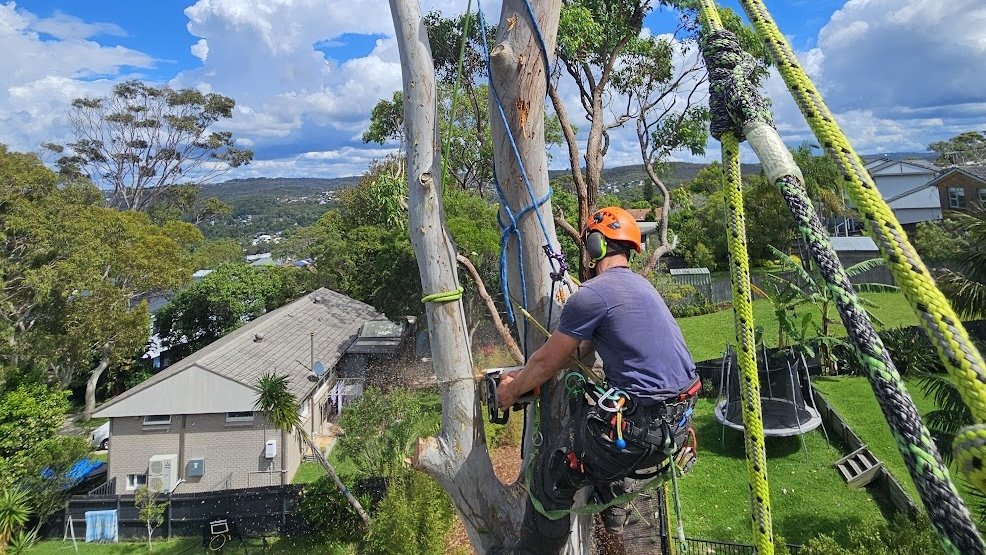
Only once council has issued the permit, and only what the permit covers. We dismantle in sections and lower on ropes, with the 48-hour notice sent before we arrive.
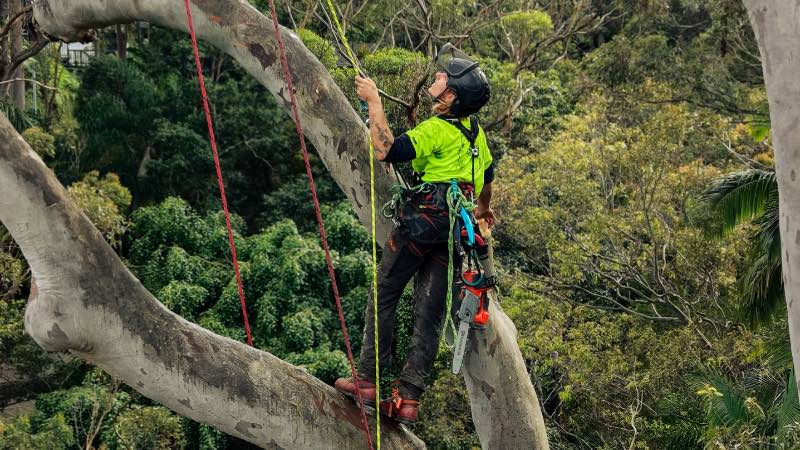
There's no 10% allowance here, so every prune on a protected tree is a permit. Deadwood removal goes through the fee-free permit. We describe the cuts so the application is easy to assess.
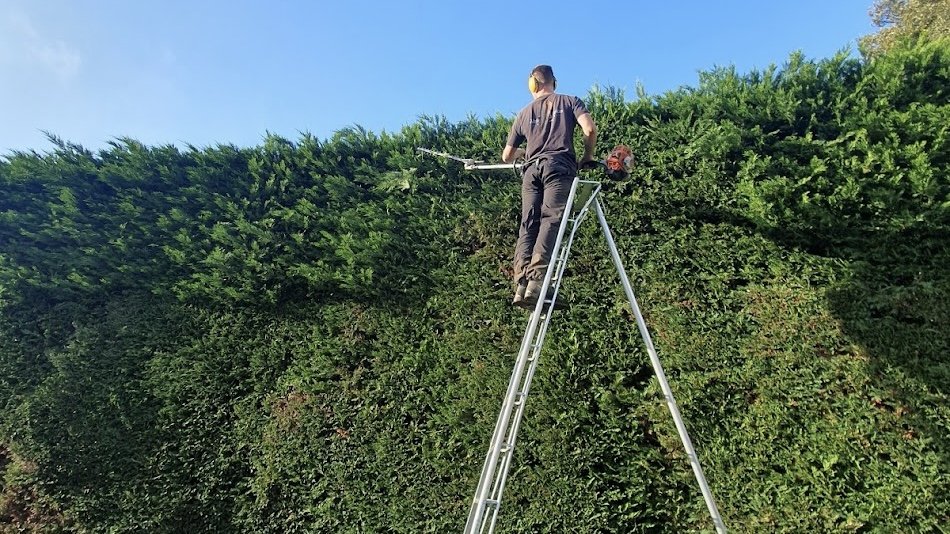
Leighton Green is on the fee-free list. A hedge plant that has grown past 4 metres meets council's definition of a tree, so we check its height before we quote the trim.
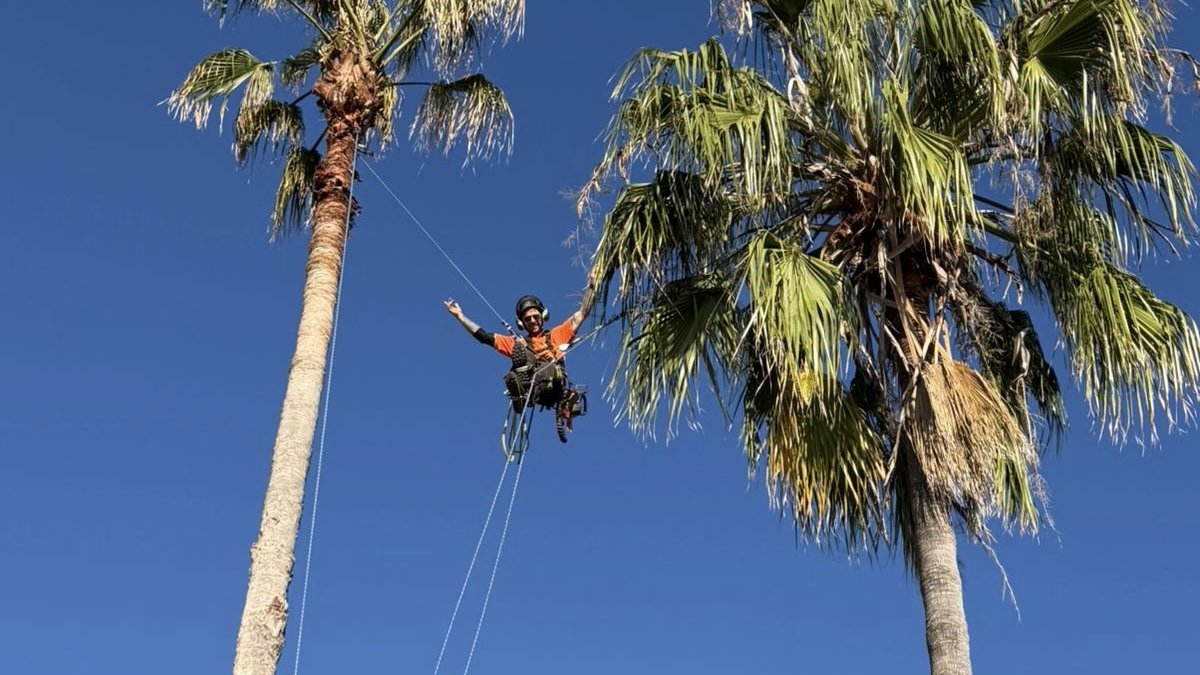
Cocos Palms are fee-free at any height, and Phoenix palms are fee-free under 6 metres. Over the size triggers, both still need the fee-free permit before we clean them up.
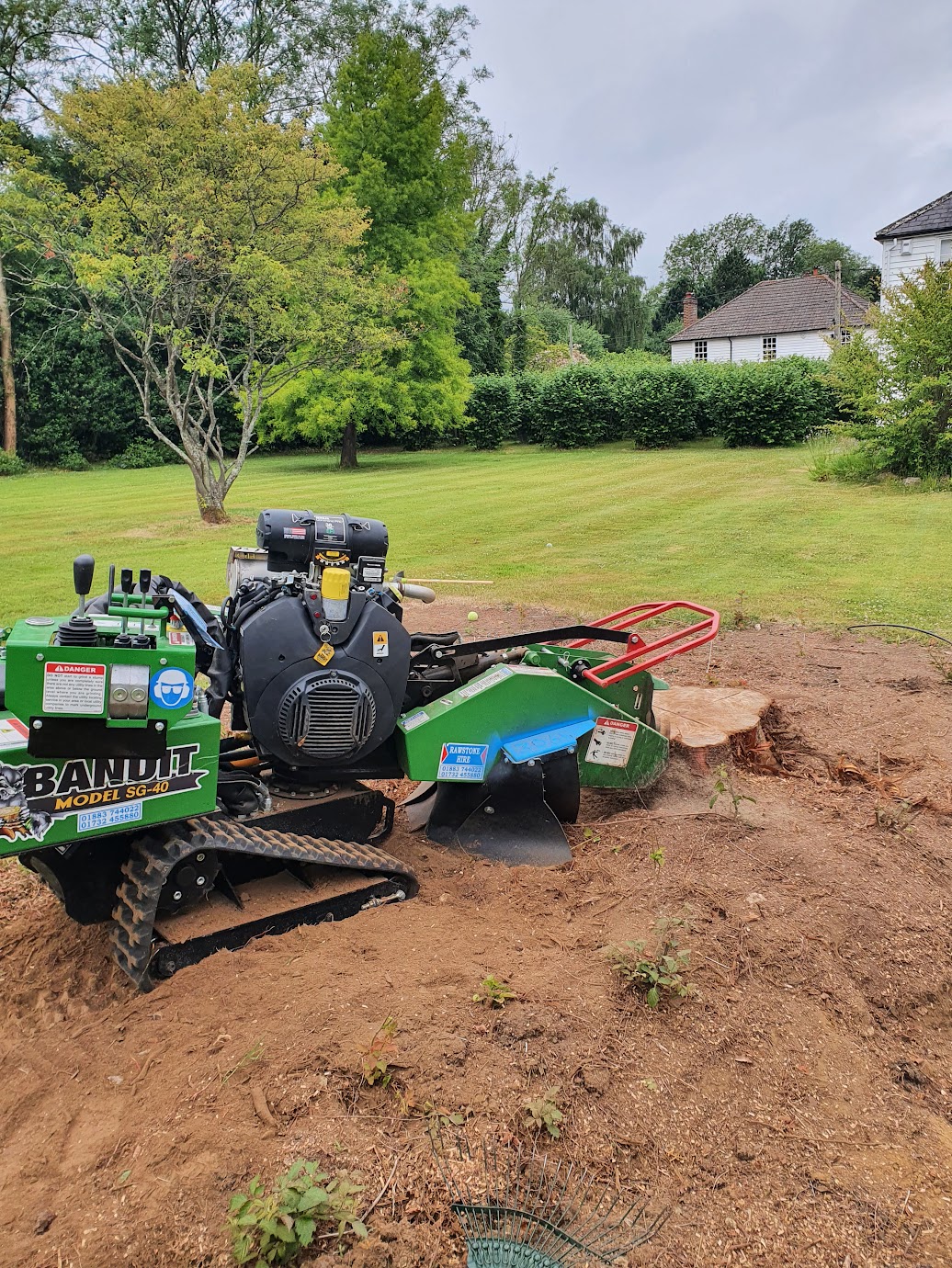
Ground out on the day the tree comes down, by a machine narrow enough for a side gate. A single stump is a job we'll happily take.
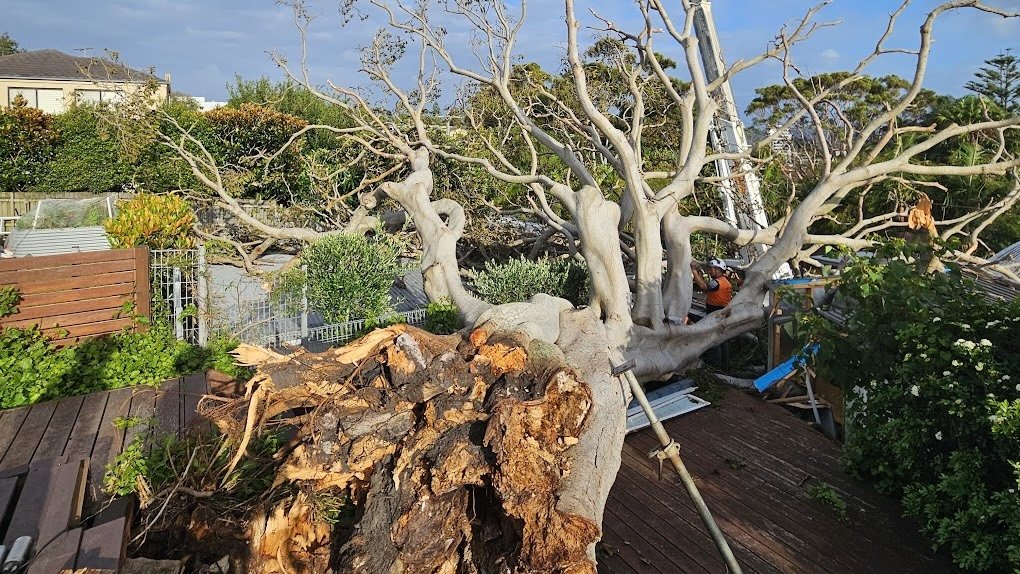
In a storm emergency Lane Cove Council asks you to call council, or the SES on 132 500 out of hours. Then call us on 0452 030 077 for the clean-up and make-safe work.
My tree is dead. Do I still need a permit in Lane Cove?
Yes. Dead trees and dead branches need a Fee-Free Tree Works permit. There's no charge, and fee-free works are usually approved within 1 to 2 weeks. A council officer inspects the tree first, and if it turns out not to be dead, council sends a payment link for a normal application. Council may ask for part of a dead tree to be left standing as habitat.
Can I prune up to 10% of my tree without a permit?
No. Lane Cove Council doesn't allow 10% pruning without a permit. Any pruning of a protected tree needs a permit, and that includes dead branches. A tree is protected if it's over 4 metres tall, has a canopy spread over 5 metres, or has a trunk over 150 mm in diameter at 1 metre above the ground.
What is the 48 hours' notice?
Once you have a permit, Lane Cove Council must be notified at least 48 hours before work starts, with the date and the details of the AQF Level 3 arborist doing the work. We give you our details for the notice when we book the job.
How much is a tree permit in Lane Cove, and how long does it take?
For 2026/27 it's $160 for one to three trees, plus $35 for each extra tree. Council allows up to 8 to 10 weeks, or usually 1 to 2 weeks for fee-free works. The permit is valid for 12 months.
Council said my tree is on the Biodiversity Values Map. What now?
Trees that are part of an endangered ecological community mapped on the NSW Biodiversity Values Map are dealt with by the NSW Native Vegetation Panel, not council, so the application goes there. We can still assess the tree and tell you whether pruning would solve the problem.
Is there anything I can remove without a permit?
Bamboo. Lane Cove Council says it can be removed without consent. Everything else over the size triggers, including exempt species, needs at least a fee-free permit.
Real Google reviews from our customers.
"Alex and his team were a pleasure to work with. Efficient, professional, clean, and competitively priced. Highly recommend!"
"Alex did an amazing job and gave me a very fair price. The job was clean and quiet for gum tree removal. My best experience so far. Highly recommend. I have used his service twice already."
"Everything about Alex is professional and gives you a sense of someone experienced and knows what he's doing. Replied to my request within an hour on the weekend, provided all details on the quote about his experience and certifications and was very reasonably priced.…"
We work across Lane Cove regularly and understand the native trees and the council process. Call us directly or send an enquiry — we'll come out, assess your trees properly and give you a straight, honest price.
0452 030 077