Serving Bilgola Plateau and the surrounding Northern Beaches — qualified, insured arborist work on large plateau blocks with significant native trees.
Bilgola Plateau sits on the elevated plateau above Bilgola Beach, a distinct suburban character from the valley below. The blocks here are large by Northern Beaches standards, and many have significant native trees — Angophoras, Banksias and Eucalypts that have been growing on these properties since before the houses were built around them. It is a suburb that takes its canopy seriously, and Northern Beaches Council's permit processes reflect that. When you call The Living Canopy, you reach Alex Price directly — the qualified arborist who will come out, assess the situation honestly and carry out the work.
The plateau terrain is generally flatter than the valley below, which makes access easier on most blocks. What the larger blocks bring is a different set of challenges: trees that have been allowed to grow to full size over many decades, sometimes with very little management, can develop structural issues that aren't obvious from the ground. Extended branches over long spans, co-dominant stems that haven't been managed through the formative years, and root systems that have grown into building foundations or retaining walls are all things we encounter regularly in Bilgola Plateau. A tree that has looked fine for twenty years can change status quickly once it reaches a certain size or encounters drought, disease or structural stress.
One thing that makes Bilgola Plateau distinct is its edge — the suburb drops away sharply in several directions, and properties on the periphery can have trees growing at or near slope breaks, sometimes with limited root zone support on the downslope side. These situations require proper assessment rather than assumptions. We look at rooting conditions, the lean direction relative to the slope, and the weight distribution of the crown before reaching any conclusions about risk level or management options.
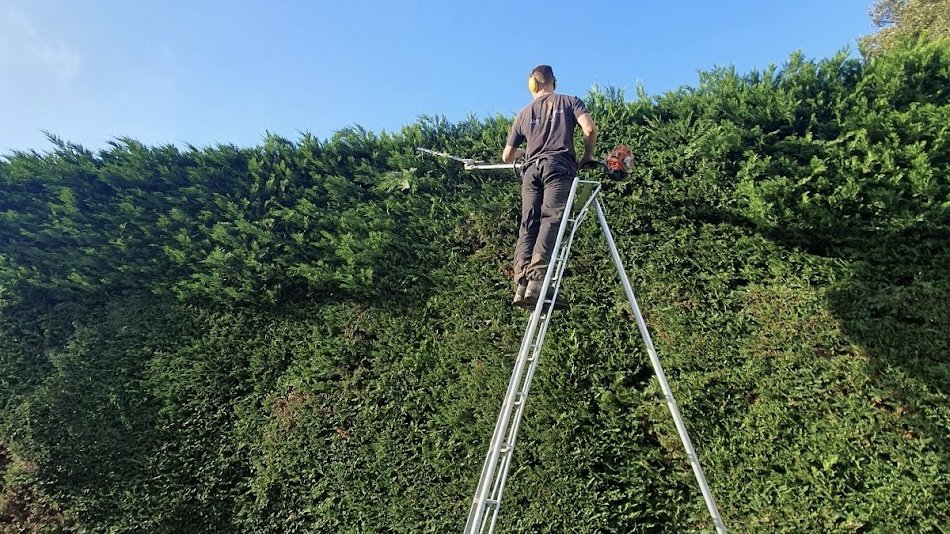
For properties with garden hedges, large Photinia, Murraya or native screen plantings, we provide regular trimming services across the plateau. Many of the established gardens here have hedges and screens that have been growing for years and need periodic maintenance to stay tidy and healthy. We carry out this work with the same attention to quality as we bring to tree removal or pruning — clean equipment, proper techniques and a tidy finish.
Every tree service you need, carried out by a qualified arborist who knows the Northern Beaches.
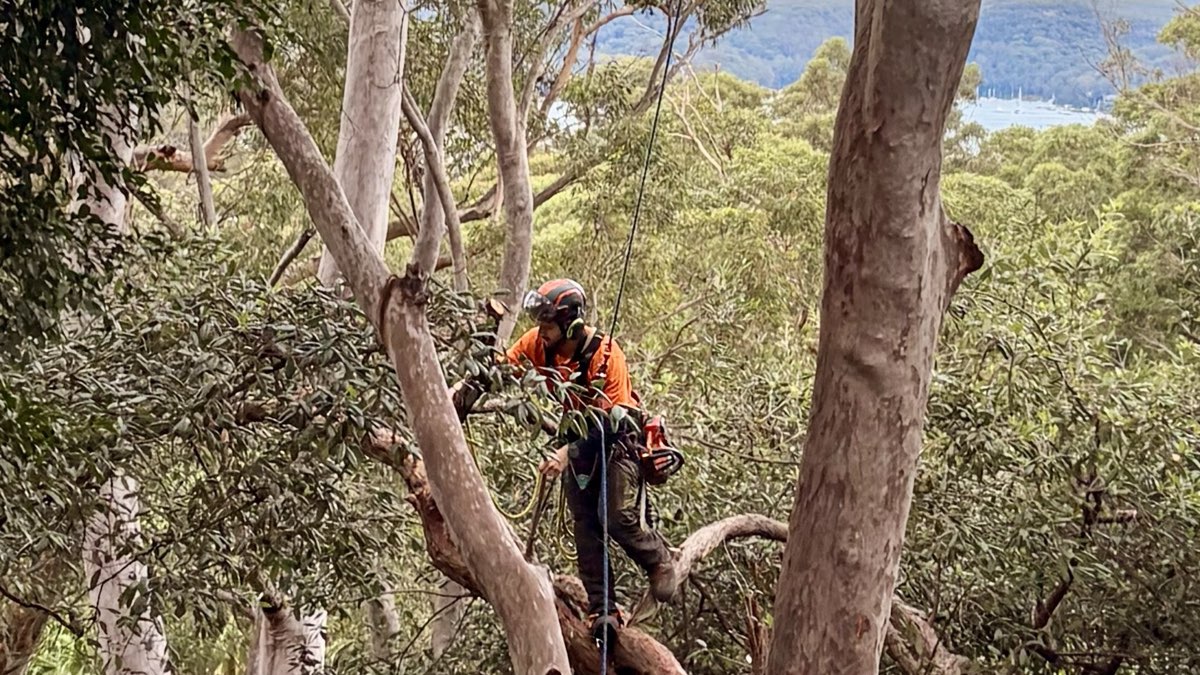
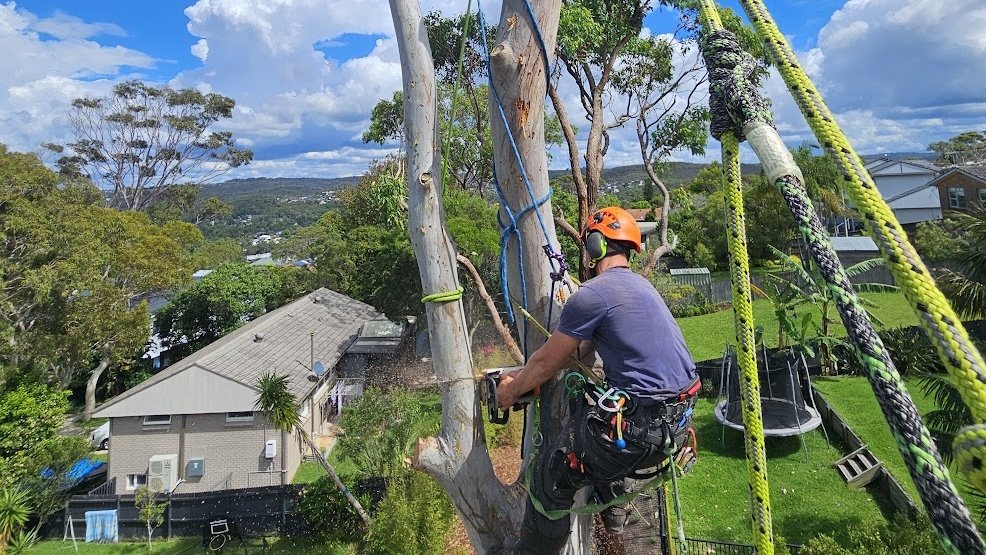
Safe, efficient removal of trees of all sizes — including technical rigging, sectional dismantling and crane-assisted work.
Crown reduction, deadwooding, formative pruning and clearance work — all to AS 4373-2007 standard on every job.
Neat, precise trimming for all hedge types. We remove all clippings and leave a clean finish every time.
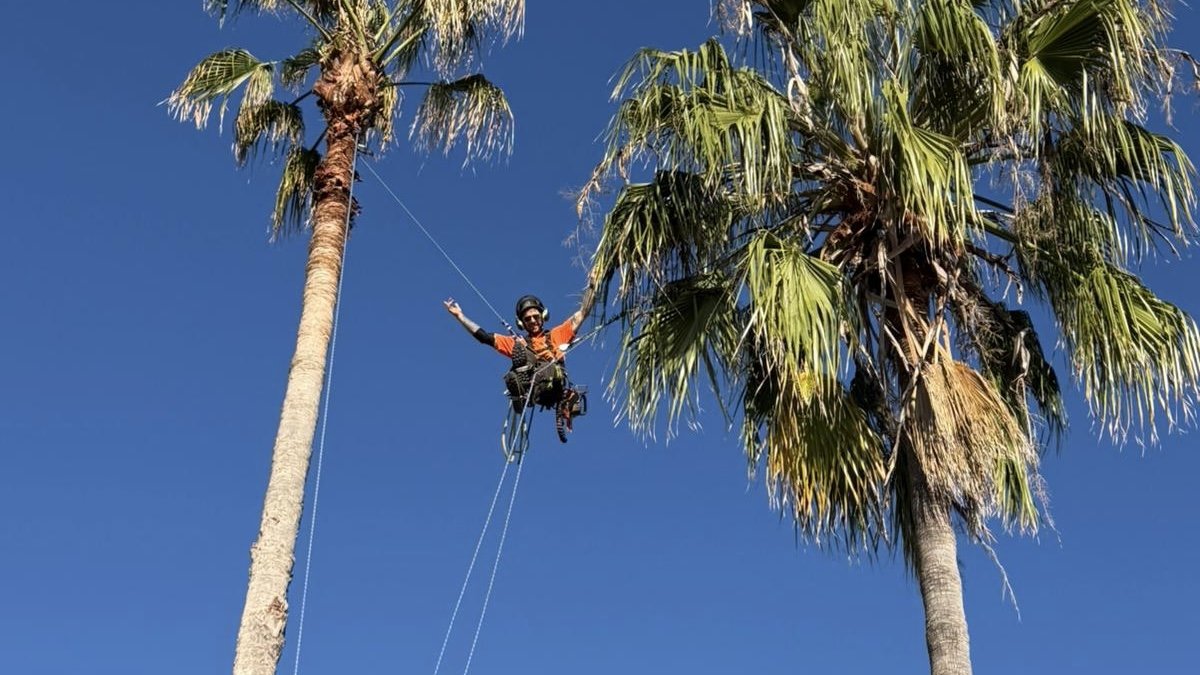
Dead frond removal, seed pod and flower stalk removal — keeping your palms healthy, safe and tidy.
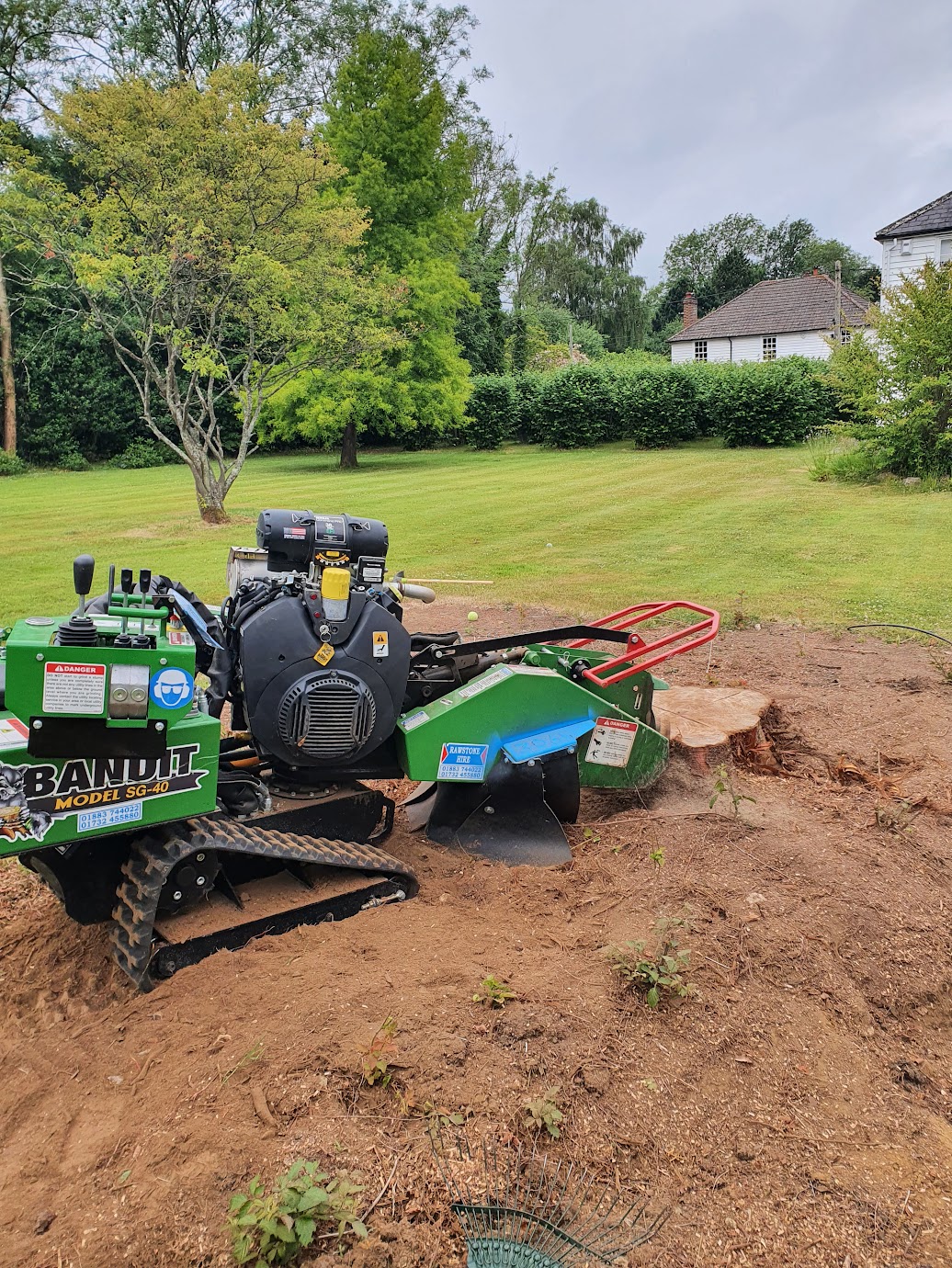
Complete removal below ground level — leaving a clean site ready for turf, landscaping or replanting.
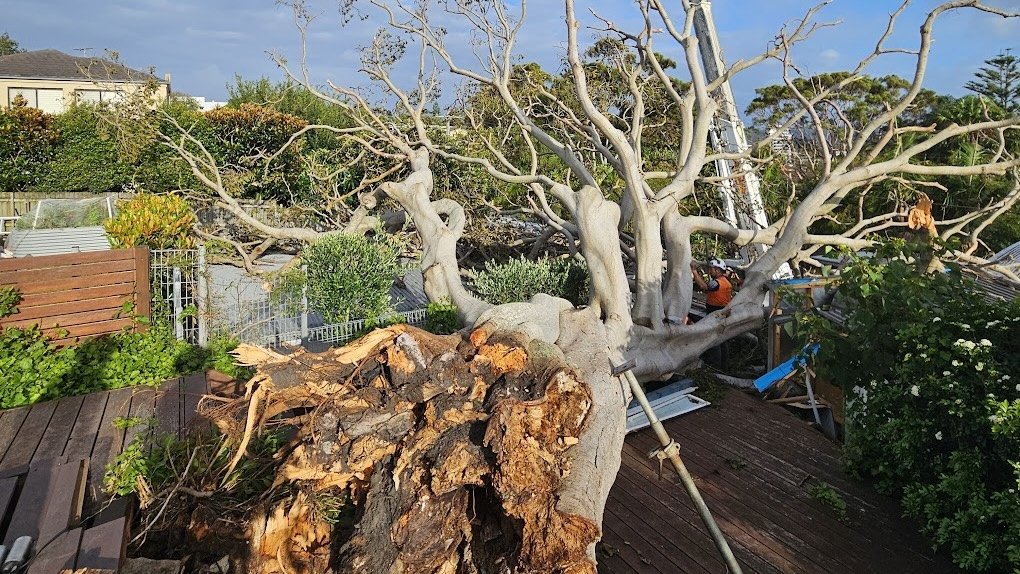
Fast response to storm damage, fallen trees and hazardous situations. Call us first.
Bilgola Plateau's sandstone geology supports a predominantly dry sclerophyll plant community, and the large residential blocks have allowed individual trees to reach their full natural size in a way that's less common in more densely developed suburbs. Angophora costata (Sydney Red Gum) is the dominant large canopy species, and on the deeper soil pockets these can be genuinely impressive trees — wide-spreading crowns, substantial trunks and the characteristic smooth orange bark that develops fully only on mature specimens. Banksia serrata (Old Man Banksia) is abundant, and on the plateau's sandier soils Banksia aemula (Wallum Banksia) also occurs. Eucalyptus gummifera (Red Bloodwood) is a common ridge-top species, its tessellated reddish bark helping to identify it from the ground.
The plateau edges and gully heads around Bilgola Plateau support additional species. Melaleuca linariifolia (Snow-in-Summer) and Melaleuca nodosa occur on slightly deeper, moister soils. Hakea species and various Acacia wattles — including Acacia longifolia (Sydney Golden Wattle) — form part of the understorey. In garden settings, a range of introduced species have been planted alongside natives: Grevillea cultivars, Callistemon varieties and various native-looking but non-local plantings are common. The mix of large natives and garden species means that almost every property in Bilgola Plateau has trees that warrant periodic professional attention, whether for safety management, aesthetics or general health.
Northern Beaches Council requires development consent under their Development Control Plan (DCP Part B13 — Tree and Vegetation Management) before removing or significantly pruning any tree that meets one or more of the following thresholds: 5 metres or more in height, a canopy spread of 5 metres or more, or a trunk diameter of 30 cm or more measured at 1 metre above ground level. Applications are submitted through Council's online portal.
In Bilgola Plateau, the large block sizes and significant native canopy mean that permit applications are common. Most mature Angophoras, Eucalypts and Banksias will require consent, and for trees at the plateau edge where the land drops toward environmentally sensitive areas, Council may apply additional assessment criteria. We advise on permit requirements at the quoting stage and can assist with applications, including the preparation of arborist reports.
Don't take our word for it — here's what our customers have said.
"We found Alex and his team very friendly and helpful. They provided a professional service and we are very pleased with their work. We will definitely use them again."
"Amazing level of service. Polite, efficient, knowledgeable, professional and exceedingly hardworking. Lovely guys. Would not hesitate to use again and will definitely recommend to others."
"Fantastic job! They turned up on time, worked fast, tidied up and did a great job all round. These guys will be my go-to now to keep the trees and hedges in order. I HIGHLY recommend."
I have a very large Angophora on my block — what does proper management look like?
A mature Angophora costata on a large block is a real asset, but it does need periodic professional attention. Proper management involves regular deadwooding to remove dead or dying branches before they become a hazard, assessment of any co-dominant stems or extended limbs over target zones, and crown raising if clearance over structures or access routes is needed. We carry out all pruning to Australian Standard AS 4373-2007 — no topping, no flush cuts, no lion's-tailing. Angophoras generally respond well to appropriate pruning and can be managed safely for many more decades.
Do trees at the edge of the plateau need special assessment?
Yes. Trees growing at or near a slope break have a different risk profile than trees on flat ground. The root system may be shallower on the downslope side, the tree may have developed a lean toward the slope due to its growth history, and a failure could send timber much further than it would on flat terrain. We assess these situations carefully and factor slope, rooting zone and target zones into our risk evaluation.
How often should large native trees be inspected?
As a general guide, large trees near structures or high-traffic areas should be assessed by a qualified arborist every two to three years. Trees that have shown any signs of stress, decay, pest attack or previous structural failure should be checked more frequently. After major storm events, a post-storm inspection is worthwhile even if no obvious damage occurred — storms can create internal fractures that aren't visible until the next significant wind event.
Is the quote visit free?
Yes, completely. We visit the property, look at the trees and provide a written quote at no charge and no obligation. For larger jobs involving multiple trees or a permit application, we'll also outline the process and timeline so you know what to expect from the start.
We work regularly across Bilgola Plateau and the surrounding Northern Beaches. Call us directly or send an enquiry and we'll come to you, assess the job and give you a clear, honest price.
0452 030 077