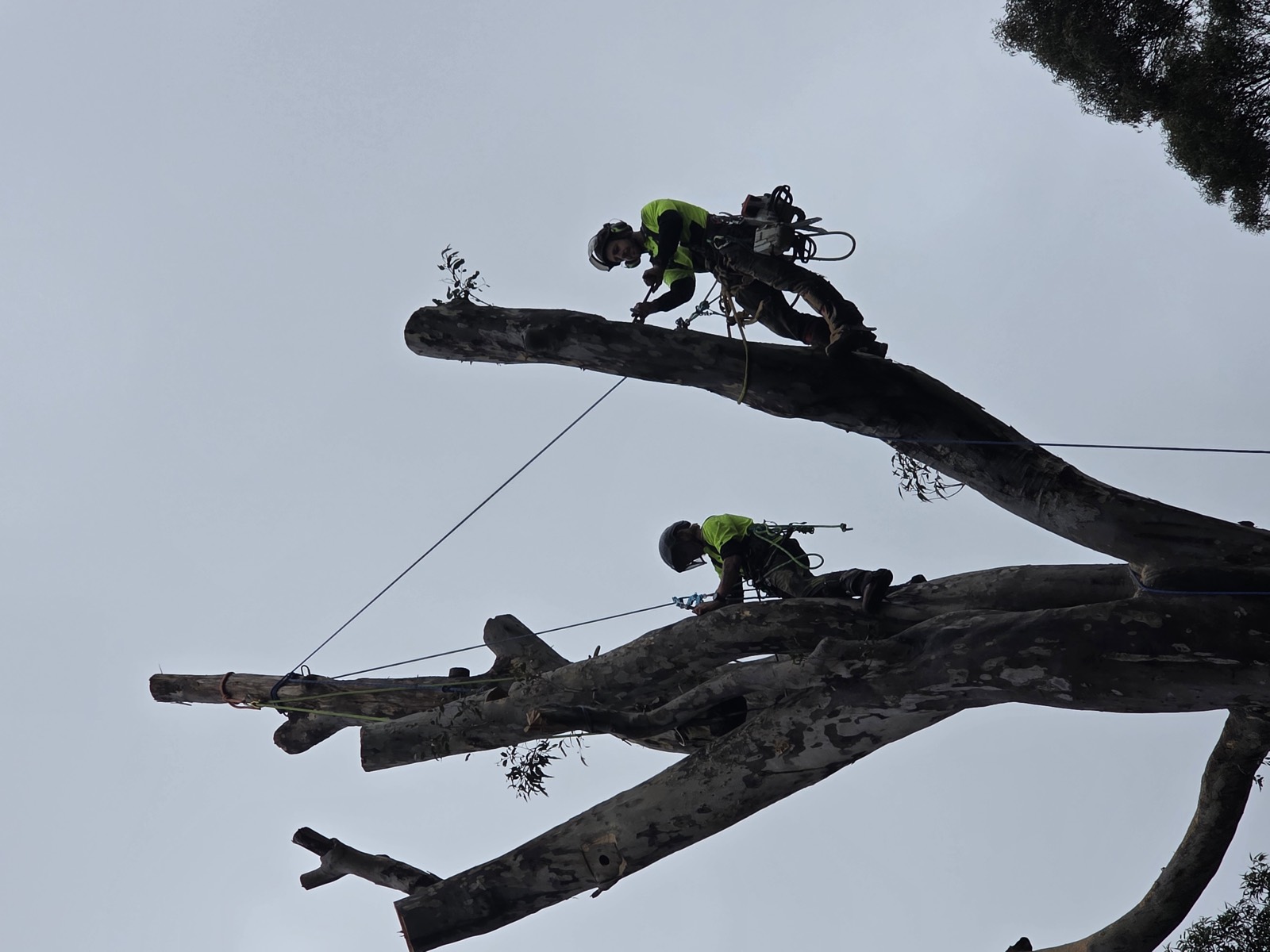
An arborist report on the Northern Beaches is one of those things people don't think about until they need one — and then they need it urgently. A council application is sitting on hold, a DA has stalled, a neighbour dispute has escalated, or a property purchase is about to proceed with unresolved questions about a large tree. Whatever the trigger, the same questions come up every time: what exactly is an arborist report, when does council actually require one, and what is it going to cost?
This guide answers all of those questions, explains the different types of report used across Northern Beaches Council applications, and sets out what to expect from the process.
When Do You Need an Arborist Report on the Northern Beaches?
There are four situations that commonly generate a need for an arborist report on the Northern Beaches:
| Situation | Report type typically required | Required by |
|---|---|---|
| Tree removal or significant pruning permit application | Permit report / basic assessment | Northern Beaches Council |
| Development Application near existing trees | DA arborist report (AS 4970) | Northern Beaches Council |
| Neighbour tree dispute or LEC proceedings | Expert witness / assessment report | NSW Land and Environment Court |
| Pre-purchase property inspection | Tree risk / condition assessment | Buyer's own due diligence |
Not every permit application requires a formal written report. Northern Beaches Council sometimes processes straightforward applications on the information provided in the online portal — particularly for clearly exempt species or small trees close to structures. When a formal report is required, council will specify this during the application process, or your arborist can advise at the time of the initial consultation.
Situations where a report is almost always required: trees over about 10 metres with visible structural concerns, any tree on a heritage-listed property, trees in environmentally sensitive areas (riparian zones, bushfire prone land), multi-tree sites, and any situation where a tree has caused or threatens to cause property damage.
The Four Types of Arborist Report
1. Basic Tree Assessment / Single-Tree Permit Report
The most common report on Northern Beaches residential properties. Covers the health, structure and condition of one or a small number of trees, and provides a professional opinion on whether removal or pruning is warranted. The report will reference the tree species, estimated age, observed defects (if any), risk rating, and recommended action. For permit applications, it will also address whether the proposed works are consistent with the Australian Standard for pruning (AS 4373-2007) or justify removal under council's DCP criteria.
This is the report most homeowners need when applying through Northern Beaches Council's online portal to remove a protected tree. It's also the appropriate report for general tree health concerns, where you want a professional second opinion before committing to action.
2. Development Application (DA) Arborist Report
When a Development Application involves construction, excavation, or site works within or near the canopy and root zone of significant trees, Northern Beaches Council will require a DA arborist report as a mandatory element of the application. This is a more detailed document than a basic assessment.
Under Australian Standard AS 4970 (Protection of Trees on Development Sites) — the standard that governs this report type — the arborist must assess the tree's root protection zones, evaluate the impact of the proposed works on those zones, and specify tree protection measures that will apply during construction. The current edition, AS 4970:2025, published on 30 May 2025, renamed the calculated area the Notional Root Zone (NRZ) and reserves Tree Protection Zone (TPZ) for the zone applied on site; the Structural Root Zone (SRZ) is unchanged, as is the trunk-diameter calculation. Many councils still reference the 2009 edition in their documentation. Councils separately require the report to be prepared by an AQF Level 5 qualified arborist (or higher).
A DA arborist report is not a removal document — it's a protection document. Its purpose is to demonstrate how the tree will be preserved through construction, not whether it should be removed. If the proposal cannot adequately protect the tree, the report may recommend design modifications or, in some cases, identify that tree removal is unavoidable — with appropriate justification.
3. Expert Witness / Land and Environment Court Report
When a tree dispute reaches the NSW Land and Environment Court under the Trees (Disputes Between Neighbours) Act 2006, the court relies on arborist evidence to determine the outcome. An expert witness arborist report is a formal document prepared to court standards — it must include the arborist's qualifications, a statement of their independence, the factual basis of the assessment, and their opinion and reasoning.
These reports are more rigorous to prepare and more expensive than standard permit reports. If you're on either side of a neighbour tree dispute that has reached or is approaching the LEC, see our guide to dealing with a neighbour's tree on the Northern Beaches for an explanation of how the court process works.
4. Pre-Purchase Tree Risk Assessment
This is not a council requirement — it's buyer-initiated. If a property purchase involves large trees near structures, a pre-purchase risk assessment provides an independent professional opinion on the tree's condition, structural integrity, and any risk it poses to the property. It also identifies whether the trees are protected under Northern Beaches Council's DCP (which affects what you can do with them after purchase) and flags any arboricultural maintenance that will be required.
A pre-purchase assessment often saves the buyer from unexpected costs — either in tree maintenance they hadn't budgeted for, or in permit applications they didn't know they'd need.
What Does the Arborist Actually Do During the Site Visit?
Understanding what happens on the day helps set realistic expectations and ensures you've given the arborist access to everything they need.
For a standard permit or DA report, the site visit typically involves:
- Species identification and size measurement. Height, crown spread, and trunk diameter at 1 m above ground are measured and recorded — these are the figures that determine whether council's DCP thresholds are met.
- Visual Tree Assessment (VTA). The arborist inspects the tree from the ground for visible defects: crown dieback, cavities, fungal bodies, cracks, root damage, soil heave, and lean. Where defects are observed, closer inspection may involve a mallet test, probing, or in some cases resistance drilling.
- Root zone assessment. For DA reports, the arborist maps the Structural Root Zone and Tree Protection Zone, which are used to determine the construction exclusion area.
- Photographs. Taken for the report record and as evidence for council.
- Context assessment. The arborist considers the tree's relationship to the site — proximity to structures, services, drainage, neighbouring properties, and the proposed development footprint.
For most residential permit reports, the site visit takes 30–60 minutes. Complex multi-tree DA sites, or trees requiring closer inspection, can take several hours.
Access matters: the arborist needs to see the full tree including the root zone. Clear any stored items from around the base of the tree before the visit, and ensure the back of the property is accessible if the tree is not visible from the street.
What Does Council Do With the Arborist Report?
A question that comes up regularly: does a positive arborist report guarantee approval? The short answer is no.
Council's assessment officers review the arborist report alongside other planning considerations — heritage overlays, biodiversity values, the DCP's tree significance criteria, neighbouring impacts, and policy. The report is expert evidence, not a decision. A well-prepared report that clearly documents the tree's condition, a properly reasoned risk rating, and a sound justification for the proposed works significantly improves the likelihood of approval — but it does not predetermine it.
What the report does do is demonstrate that a qualified professional has assessed the situation. Applications submitted without a required arborist report, or with a poorly prepared one, are commonly rejected or returned for additional information, adding weeks to the process and sometimes requiring a second site visit.
For a full walkthrough of the Northern Beaches Council permit process, see our council tree removal permit guide, or the Northern Beaches tree permit page which covers the online application portal steps.
How Long Does an Arborist Report Take?
Typical turnaround times from site inspection to report delivery:
| Report type | Typical turnaround |
|---|---|
| Basic single-tree assessment | 3–5 business days |
| Permit report (removal or pruning) | 5–7 business days |
| DA arborist report (single tree) | 7–10 business days |
| DA report (multiple trees, complex site) | 10–15 business days |
| Expert witness / LEC report | Variable — advise court dates at booking |
If your council application or DA has a lodgement deadline, flag this when booking — we can often prioritise where the situation allows. It's worth noting that council's own assessment process after receiving a complete application typically takes 10–15 business days for straightforward permit applications, so the total timeline from site inspection to decision is usually four to six weeks.
What Does an Arborist Report Cost on the Northern Beaches in 2026?
Pricing for arborist reports on the Northern Beaches in 2026:
| Report type | Typical price range |
|---|---|
| Basic assessment / single-tree permit report | $350–$650 |
| Level 5 permit report (removal or major pruning) | $600–$1,200 |
| DA arborist report — single tree | $800–$1,400 |
| DA arborist report — multiple trees / complex site | $1,200–$2,500 |
| Pre-purchase tree risk assessment | $400–$800 |
| Expert witness / LEC report | From $1,500 — quote on request |
These figures reflect market rates on the Northern Beaches in 2026. Cost is influenced by the number of trees, site complexity, report type, and required turnaround. A report that requires additional testing (resistance drilling, soil investigation) or involves multiple site visits will cost more.
One thing worth noting: the arborist report fee is separate from — and much smaller than — the cost of any tree work that may follow. If a permit is approved and you proceed to removal or pruning, the report cost is a sunk cost that's already in. Many arborists (including us) credit the report cost against the subsequent tree work if you proceed with the same operator.
Who Is Qualified to Write an Arborist Report?
Not everyone who calls themselves an arborist is qualified to prepare a report that council will accept. The standard Northern Beaches Council requires for Development Application arborist reports is preparation by an AQF Level 5 qualified arborist — the Diploma of Arboriculture or equivalent. This aligns with AS 4970, which specifies Level 5 as the minimum qualification for tree protection zone assessments on development sites.
For basic permit applications involving a single residential tree, an AQF Certificate III arborist with demonstrated assessment experience may be accepted — but the benchmark councils increasingly expect is Level 5, and reports prepared at a lower qualification level are more likely to generate additional questions or requests from council officers.
Always confirm the qualification requirement with council before engaging a report writer. Ask your arborist what qualification they hold and whether they carry professional indemnity insurance — which is separate from the public liability cover that covers their physical work.
Alex Price of The Living Canopy holds an AQF Certificate III in Arboriculture with a Level 5 Diploma in progress, carries $20M public liability insurance plus workers compensation, and prepares reports under AS 4970 and AS 4373-2007. We work across all Northern Beaches suburbs — from Manly and Dee Why to North Narrabeen, Mona Vale, and out to Pittwater.
If you're not sure whether your situation requires a formal report, call 0452 030 077 — a five-minute conversation will usually clarify what you need before you commit to anything.
Arborist reports for Northern Beaches Council applications
Permit reports, DA arborist reports and tree risk assessments prepared under AS 4970. Fast turnaround. Call 0452 030 077 or book a consultation online.
Learn about our reportsFrequently Asked Questions
When does Northern Beaches Council require an arborist report?
Council requires an arborist report when you apply for development consent to remove or significantly prune a protected tree (5 m+ height, 5 m+ canopy spread, or 30 cm+ trunk diameter at 1 m). A report is also mandatory for any Development Application where proposed works are within or near significant trees. Some straightforward applications proceed without a formal report — your arborist can advise for your specific situation.
How much does an arborist report cost on the Northern Beaches in 2026?
A basic permit report runs $350–$650. A full Level 5 report for a council permit or DA costs $600–$1,200 for a single tree; multi-tree DA reports run $1,200–$2,500 depending on site complexity. Expert witness reports for Land and Environment Court proceedings start at around $1,500. Many arborists credit the report cost against subsequent tree work if you proceed with them.
How long does an arborist report take?
A basic single-tree assessment is typically delivered within 3–5 business days. A full Level 5 permit report takes 5–7 business days. DA arborist reports run 7–15 business days depending on complexity. If you have a council lodgement deadline, flag this at booking so turnaround can be prioritised.
Does an arborist report guarantee council approval for tree removal?
No. A report provides the professional evidence base for council's decision — it doesn't predetermine the outcome. Council weighs the report alongside heritage, biodiversity, DCP criteria and other considerations. A well-prepared report significantly improves the likelihood of approval, but cannot guarantee it.
Who is qualified to write an arborist report on the Northern Beaches?
Northern Beaches Council requires DA arborist reports to be prepared by an AQF Level 5 qualified arborist. That threshold comes from council policy rather than from AS 4970 itself, which governs how trees are assessed and protected rather than who writes the report. For basic permit applications, an AQF Certificate III arborist may be accepted, but Level 5 is the benchmark councils increasingly expect. Always confirm the qualification requirement with council before engaging a report writer, and check that the arborist carries professional indemnity insurance.