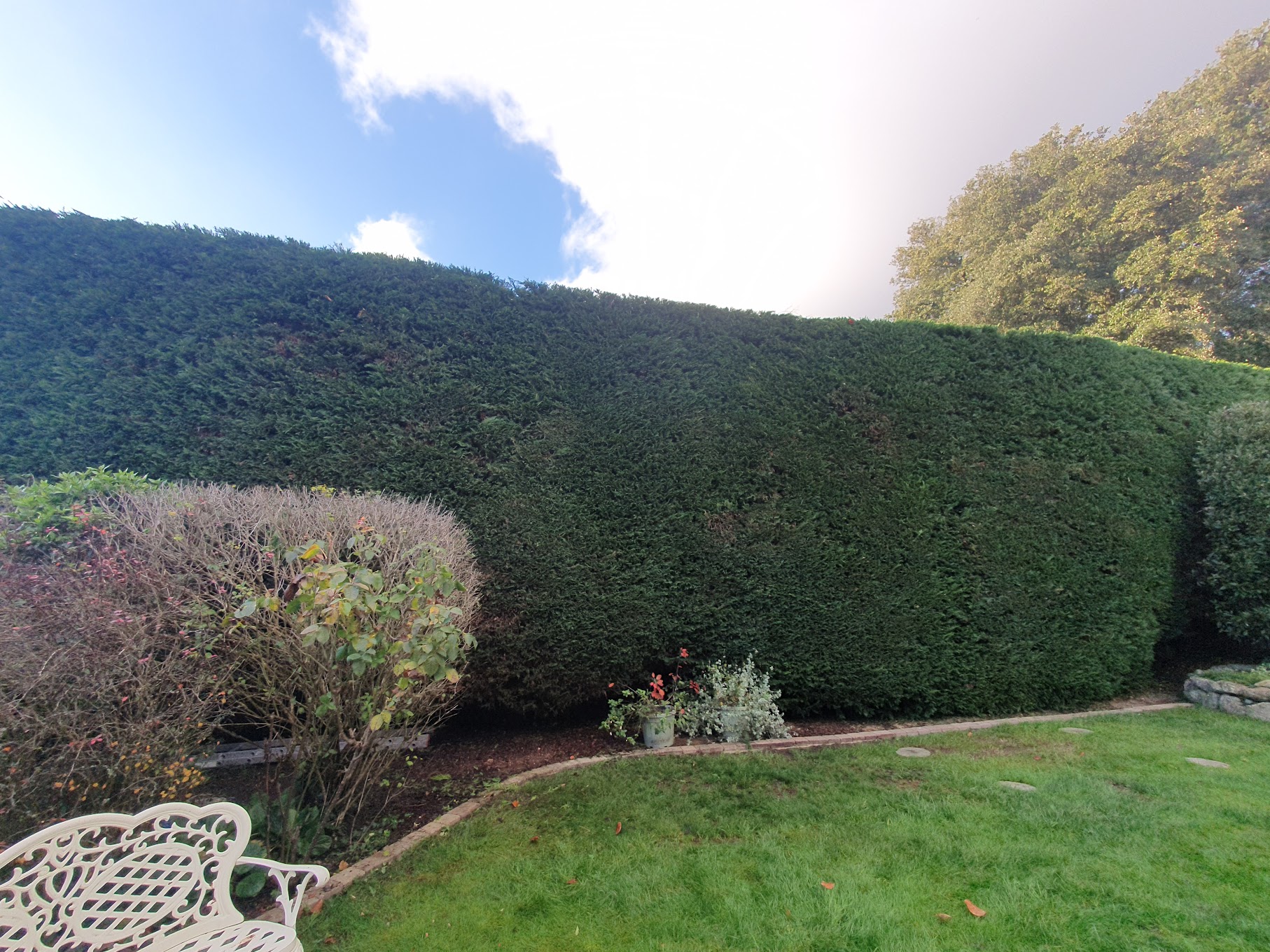
Hedges do a lot of work on Northern Beaches properties — privacy screens, boundary markers, windbreaks against strong southerlies, and in many cases the defining feature of a front garden. Lilly pilly, photinia, English box, pittosporum, westringia and bamboo are all common along the peninsula, from the exposed coastal blocks at Collaroy and Narrabeen to the more sheltered streets of Manly and Seaforth.
The challenge is that fast-growing species like lilly pilly can put on 40–60 cm of growth in a season, and a hedge that looked sharp in October can look ragged and gappy by March if it hasn't been touched. The difference between a neat, dense hedge and an overgrown barrier that's going hollow at the base comes down almost entirely to timing and technique.
This guide covers when to trim the most common hedge species found on the Northern Beaches, what professional hedge trimming involves, what it costs in 2026, and the situations where a council permit might apply. If you're looking to book a job rather than read about it, head to our hedge trimming service page — otherwise, read on.
Most Common Hedge Species on the Northern Beaches
Getting the timing right starts with knowing what you've got. Here are the species we most frequently trim on Northern Beaches properties:
| Species | Growth rate | Typical use | Max unclipped height |
|---|---|---|---|
| Lilly pilly (Syzygium/Acmena) | Fast | Privacy screen, boundary | 6–10 m+ |
| Photinia (Red Robin) | Medium–fast | Privacy screen, windbreak | 4–5 m |
| English box (Buxus) | Slow | Formal hedging, edging | 1–2 m |
| Pittosporum (tenuifolium/tobira) | Medium | Informal screen, coastal hedge | 3–5 m |
| Camellia | Slow–medium | Formal hedge, backdrop | 3–5 m |
| Bamboo (clumping) | Fast | Privacy screen, windbreak | 4–8 m |
| Westringia | Medium | Coastal hedge, native option | 1–2 m |
| Olive (Olea europaea) | Medium | Formal screen, Mediterranean style | 5–8 m |
When to Trim Each Species
Timing your trim matters more than most people realise. Trimming at the wrong time of year either removes next season's buds (camellias), stimulates vulnerable new growth just before cold weather (lilly pilly in autumn), or simply wastes effort because the plant is about to flush and undo your work in six weeks.
Lilly pilly — Trim after each new growth flush. On the Northern Beaches this typically means October–November after the main spring flush, and again in January–February after the summer flush. Avoid trimming in late autumn when cold nights can damage the tender new shoots the trimming stimulates. A lilly pilly trimmed at the right time will put on a new flush of that distinctive pink-bronze new growth and then harden off into a dense green wall.
Photinia (Red Robin) — The timing is tied to the flush. The red new growth that gives photinia its name emerges in spring and turns green as it matures. Trim after it turns green — typically from November through early December for the main flush, and again in late summer. Trimming while the foliage is still red removes the visual display; trimming too early stimulates another flush at the wrong time.
English box — Slow-growing and forgiving of timing. The main trim goes in after the first flush in late spring (October–November). A light tidy in late summer (February–March) keeps it sharp through winter. Avoid trimming within about six weeks of anticipated cold snaps — not usually a concern on the Northern Beaches coast, but worth noting for more exposed or elevated positions.
Pittosporum — One of the most forgiving hedging species for timing. It tolerates trimming from spring through autumn, responds well to hard cuts if it has gotten out of shape, and bounces back quickly. If you want to do one trim a year, late spring (October–November) is the right window.
Camellia — Trim immediately after flowering, while you can still see where the flowers were. This timing is critical: camellia sets its buds for next season within a few months of flowering, so trimming in late summer, autumn or winter removes next year's flower buds entirely. If you are trimming camellias for shape rather than flower display, timing flexibility increases, but most clients want both.
Clumping bamboo — Management rather than trimming. Cut old and dead culms (canes) out completely at the base in late winter before new culms emerge in spring. Trim canes back to height at the same time. Running bamboo is a different problem altogether — if you have running bamboo on the Northern Beaches, call us.
Westringia — Hardy and tolerant of most timing from autumn through spring. Avoid hard cuts in summer heat. Westringia responds well to regular light trimming and will stay dense and compact; left untrimmed it becomes woody and open at the base.
Olive — Trim in late winter to early spring before new growth breaks. Can handle significant size reduction if needed. Olives allowed to grow to full size can become substantial trees — regular trimming while young and manageable is far easier than trying to reduce a 6-metre olive that has outgrown its space.
For a broader look at seasonal timing for trees and large shrubs, see our guide on winter tree pruning on the Northern Beaches.
What Professional Hedge Trimming Involves
The job is straightforward when it's done right. Here's what a typical professional hedge trimming visit looks like on a Northern Beaches property:
- Site assessment — We check the hedge species, height, density, access, and any potential complications: overhanging power lines, proximity to the boundary, whether there are structures or garden beds below that need protecting.
- Set-up — Drop sheets or tarps under the working area, ladders or elevated work platforms for hedges above 2 m, and personal protective equipment. Commercial-grade petrol and battery hedge trimmers for the main cutting, hand shears for detail work.
- Trimming — We start at the top to establish the profile, then work down the sides. The goal is a consistent angle that directs light into the lower canopy — slightly wider at the base than the top — which keeps the hedge dense rather than shading itself out at ground level.
- Clean edges — Edge work along the base and any hardscaping, followed by a blow-down of paths and surfaces.
- Cleanup — Clippings are collected and either mulched on-site if you have space, or removed. Volume of green waste is typically the main variable in disposal cost.
For tall hedges above 2.5 m we typically use an elevated work platform (EWP). For hedges adjacent to power lines we work from one side only or arrange a line separation with Ausgrid if required. We carry full public liability insurance for all hedge trimming work — important on any job where the work is adjacent to a boundary, a structure, or a power line.
We also offer tree pruning as part of the same visit if there are trees in the same garden that need attention.
How Long Does It Take?
A 10-metre lilly pilly hedge at 1.8 m height typically takes a two-person crew around 1.5–2 hours from set-up to pack-up. The main variables are:
- Height — Working above 2 m adds setup time for the elevated platform and significantly slows the pace of trimming. Hedges at 3–4 m take roughly twice as long per metre as hedges at 1.5 m.
- Density — A thick, mature box hedge with tight, dense growth takes more time per metre than a looser pittosporum screen.
- Access — Rear yards accessed through narrow side passages, work above retaining walls, and hedges with uneven ground below all add time.
- Frequency of maintenance — A hedge on a regular quarterly programme is significantly faster to trim than one that hasn't been touched in 18 months. The first visit after a long break is the slowest and most expensive; subsequent visits are faster.
- Debris volume — A 20-metre, 2-metre-high lilly pilly generates a substantial volume of clippings. If it all needs to be removed off-site, loading and disposal time adds to the job.
Hedge Trimming Costs on the Northern Beaches in 2026
Pricing varies by job size, height, access and frequency. These are typical ranges for professional hedge trimming on the Northern Beaches in 2026:
| Job type | Estimated cost |
|---|---|
| Small hedge (under 10 m, under 1.5 m high) | $180–$350 |
| Medium hedge (10–20 m, up to 2 m high) | $350–$600 |
| Large or tall hedge (over 20 m, or over 2 m high) | $600–$1,200+ |
| Bamboo management (clumping, up to 20 m²) | $300–$700 |
| Overgrown hedge (not trimmed in 12+ months) | Add 30–50% to base rate |
A few things affect where your job lands in those ranges:
Height is the biggest cost driver. Once a hedge is above 2 m, an elevated work platform is needed for safe access. EWP hire and the additional setup time this requires adds meaningfully to the cost compared to a hedge that can be trimmed from the ground or a ladder.
Debris removal adds cost. If you have space to leave the clippings on-site as mulch, that reduces the job cost. If everything needs to be loaded and taken away, that's additional labour and disposal. Lilly pilly and photinia generate high volumes of material per metre compared to box or westringia.
Regular maintenance is cheaper per visit. Clients on quarterly or six-monthly programmes typically pay less per visit than one-off jobs, because each visit takes less time. If you're spending more each year on a one-off basis than you would on a quarterly programme, it's worth considering a regular arrangement.
Access affects price. A front boundary hedge with truck access is straightforward. A rear yard hedge accessed through a narrow side gate, over a retaining wall, or on steep ground takes more time to set up and work safely.
Do You Need a Council Permit to Trim a Hedge?
This question comes up regularly and the short answer is: for routine hedge trimming, almost certainly not.
Northern Beaches Council permit requirements under the Local Environmental Plan (LEP) and Development Control Plan (DCP) are triggered by tree removal or significant pruning of trees that meet certain criteria — typically species on the Biodiversity Conservation Act list, trees over a set trunk circumference or height, or vegetation within defined ecological buffers. Standard hedge trimming of boundary plantings sits well outside this framework.
That said, there are genuine edge cases:
- Tall hedges that have become tree-like. A lilly pilly that was planted as a hedge 15 years ago and is now 6 m tall with a significant trunk may be treated as a tree by council, not a hedge, particularly if you're proposing significant reduction rather than light maintenance trimming.
- Hedges in ecological buffer zones. Properties near coastal wetlands, riparian corridors, or mapped bushland on the Northern Beaches may have additional controls on vegetation removal and modification.
- Significant height reduction. The general rule of thumb is that removing more than 30% of a plant's canopy in a single operation may trigger the need for approval — though this is more relevant to tree pruning than routine hedge trimming.
If you're unsure whether your property or proposed work falls into any of these categories, our full guide to the Northern Beaches council permit process explains the rules in detail. When in doubt, a quick call to us or to Northern Beaches Council's tree management team will give you a definitive answer before you start.
When to Call a Professional
DIY hedge trimming is straightforward for small, accessible hedges up to about 1.5 m. A decent battery hedge trimmer, a straight eye and regular maintenance is all you need. Once things change, the calculation shifts.
Call a professional when:
- The hedge is over 2 m. Working at height on a ladder with a running hedge trimmer is one of the more common sources of serious injury in domestic garden maintenance. Professional crews work from elevated platforms with appropriate training and PPE.
- There's a power line within reach. Any work near or above power lines requires specific training and clearances. We arrange exclusion zones and, where necessary, line separations with Ausgrid.
- The hedge is overhanging the boundary. Working on a boundary hedge requires care about what falls on the neighbour's side, how the cut affects the hedge's appearance from their side, and whether any of the trimming legally constitutes work on their plants. A professional will manage this cleanly and document it.
- It's been 12+ months since the last trim. Overgrown hedges often have significant dead wood inside and may need more than just a surface trim to get back to a healthy, dense state. A skilled eye can tell the difference between trimming that will result in a good recovery and trimming that will just expose dead stubs.
- You want a consistent, formal result. Commercial-grade trimmers and an experienced eye produce a much more consistent finish than the average homeowner can achieve with a domestic trimmer. If the hedge is prominent — front boundary, poolside, formal garden — it's worth having it done properly.
We service the full Northern Beaches LGA for hedge trimming, from Manly at the southern end to Palm Beach in the north. We can usually provide a quote within a few days of contact and schedule most jobs within a week or two. Find out more on our hedge trimming service page.
Need your hedges trimmed on the Northern Beaches?
We provide professional hedge trimming across the Northern Beaches LGA — tidy finish, full insurance, debris removed. Get a free quote and we'll get it sorted.
Get a free quoteFrequently Asked Questions
How often should I trim my hedge on the Northern Beaches?
Most hedges benefit from trimming 2–4 times per year. Fast-growing species like lilly pilly and photinia typically need trimming 3–4 times per year to stay dense and neat. Slower species like English box and camellia can get by with 1–2 trims per year. The right frequency also depends on how formal you want the result — a tightly clipped formal hedge needs more frequent attention than a looser privacy screen.
How much does hedge trimming cost on the Northern Beaches?
Professional hedge trimming typically costs $180–$350 for a small hedge under 10 metres, $350–$600 for a medium 10–20 metre hedge, and $600–$1,200 or more for large or tall hedges requiring elevated access. Overgrown hedges that haven't been trimmed in over 12 months generally attract a loading of 30–50% due to the additional time required.
What is the best time of year to trim a lilly pilly hedge?
The best time to trim a lilly pilly is after each new growth flush — typically October–November and again in January–February. Avoid trimming just before cold weather. Timing your trim to follow the growth flush keeps the hedge dense and avoids stimulating vulnerable new shoots at the wrong time of year.
Do I need a council permit to trim my hedge on the Northern Beaches?
In most cases, no. Routine hedge trimming of boundary plantings is generally exempt from Northern Beaches Council permit requirements, provided you are trimming (not removing) and the plants are not listed significant trees. Edge cases arise with very tall hedges that have become tree-like over time, or hedges in ecological buffer zones. When in doubt, check with council or call us first.
Can I trim my neighbour's hedge that's overhanging my property?
Under NSW law, you have the right to prune vegetation that overhangs or encroaches on your property back to the boundary line — without needing your neighbour's permission — provided the work does not cause unreasonable harm to the plant. You cannot enter your neighbour's property without permission, and you must return any material you remove. For significant work on a large hedge spanning the boundary, it is worth having a professional assess the job first.